Joe Colombo
The Joe Colombo Story
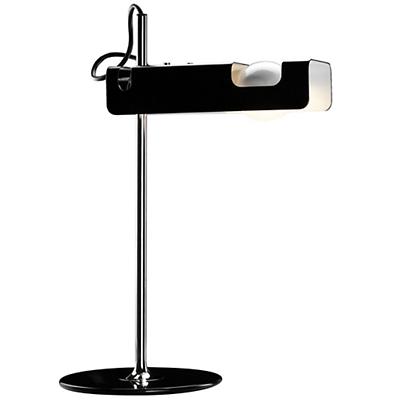
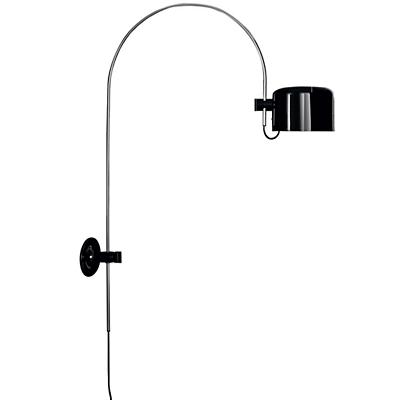
Italian lighting and furniture designer Joe Colombo was born July 30, 1930 in Milan. His career consisted of designing theoretical "living systems" and experimental modern furniture and accessories like the Roll Armchair and Footstool (1962), the Elda Armchair (1963), the Universale Chair (also called the 4867 Chair, for Kartell in 1965), the Spider Lamp (for Oluce, 1965), and the Optic Clock (1970, re-released by Alessi in 1988). He passed away from heart failure on July 30, 1971, on his 41st birthday. As prolific as he was, one can't help but wonder what else Joe Colombo might have accomplished given more time.
Read moreRead less
Why We Love Joe Colombo
Although his career was short, Joe Colombo had a profound effect on the world of modern lighting and furniture design. He embraced technology as the primary motivating factor for coming design and saw himself as the "creator of the environment of the future." As such, Joe Colombo furniture designs have a wonderfully futuristic aspect that is still exciting and forward-thinking to today's modern design audience. He imagined and designed communal living and work environments, multi-functional spaces equally well-suited for experimentation and meditation, for solitude as well as socializing. His furniture multitasks similarly; it's at once comfortable and softly sculptural, inspiring both relaxation and stimulating conversation.
In His Own Words
“The possibilities presented by the extraordinary development of audiovisual processes are enormous. The repercussions on the way in which humanity lives could be considerable. People will be able to study at home and carry on their own activities there. Distances will no longer have much importance.”
Noteworthy Products by Joe Colombo
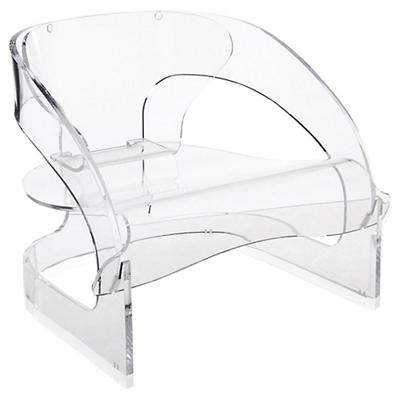
The Joe Colombo Armchair by Kartell recreates Colombo's original 4801 Armchair. When Colombo designed it in 1965, technology was not advanced enough for him to make it the way he wanted. So it was made out of plywood. Forty years later, materials and engineering finally caught up to Colombo's vision. So Kartell was able to reissue the chair using smoothly curved panels of PMMA plastic, as Colombo originally intended.











 Back To Top