Black Modern Sectional Sofas









Sectionals Explore
Black Sectional Sofas
A black sectional sofa anchors your living room with timeless sophistication and remarkable versatility. Whether you're drawn to the luxurious depth of black leather or the inviting texture of performance fabrics, black sectionals create a striking foundation that adapts to minimalist, industrial, and contemporary aesthetics alike. Our curated collection spans modular configurations, L-shaped classics, and oversized loungers—each designed to balance visual impact with everyday comfort. From compact apartment solutions to expansive family room centerpieces, discover how the right black sectional transforms your space into a polished, purposeful retreat.
Understanding Black Sectional Sofas
Black sectionals offer unmatched design flexibility, serving as both bold statement pieces and neutral backdrops that elevate surrounding decor. The N701 3 Seater Sofa by Ethnicraft exemplifies this versatility with its graphite velvet upholstery and modular adaptability. Black absorbs light rather than reflecting it, creating visual weight that grounds open-concept spaces while making rooms feel more intimate. Performance fabrics in black hide everyday wear better than lighter tones, making them ideal for households with pets or children. Leather options like the Luva Modular Sofa in Obsidian Leather age beautifully, developing character over time while maintaining their sophisticated appeal.
Black Sectional Style Variations
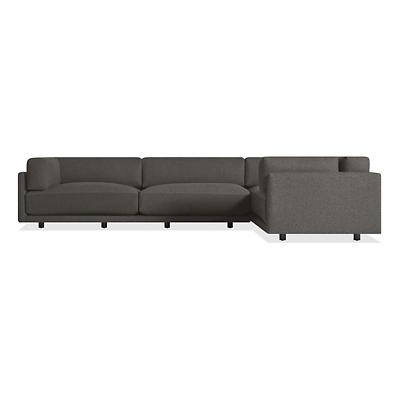
• Modern Minimalist: Clean-lined silhouettes with low profiles and slim track arms define contemporary black sectionals. The Sunday L Sectional Sofa in Sanford Black showcases this aesthetic with architectural precision and tailored cushions.
• Industrial Edge: Metal accents, exposed legs, and distressed leather create raw sophistication. Look for pieces with gunmetal frames or riveted details that complement exposed brick and concrete.
• Luxe Comfort: Deep-seated designs with plush cushioning and velvet upholstery deliver hotel-inspired elegance. The Lauren Black Velvet Double Chaise Sectional offers sumptuous lounging with its oversized proportions.
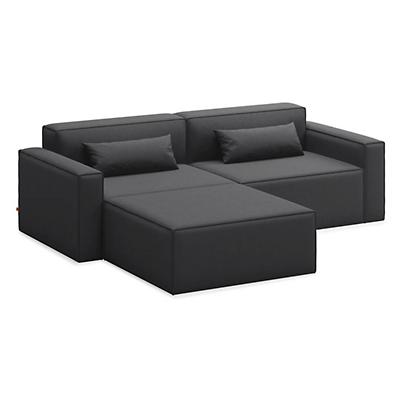
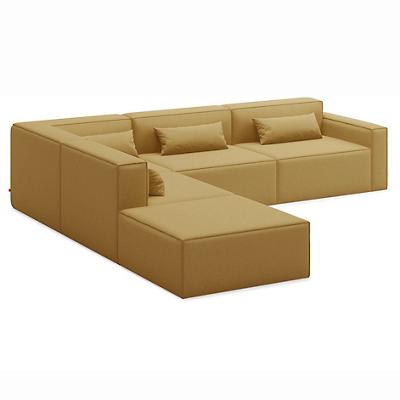
• Modular Flexibility: Reconfigurable pieces adapt as your space evolves. The Matic Sectional Sofa by Knoll features interchangeable components in Black Onyx that shift from L-shaped to chaise configurations.
Materials & Finishes for Black Sectionals
• Leather Options: Full-grain leather develops rich patina while maintaining durability. The Biboni Sectional Sofa in Onyx Stretch Appeal offers supple texture with exceptional resilience. Leather resists pet hair and cleans easily with proper conditioning.
• Performance Fabrics: Stain-resistant weaves handle spills and daily use without compromising softness. Look for fabrics rated 50,000+ double rubs for high-traffic areas. Heathered Black and charcoal blends disguise minor wear better than solid blacks.
• Velvet Textures: Light-catching pile adds dimensional depth while feeling luxurious against skin. Velvet shows less dust than smooth fabrics but requires regular vacuuming to maintain luster.
• Frame Finishes: Charcoal powder-coated steel, matte black wood legs, or glossy lacquered bases complement upholstery choices. The Pixel Outdoor Round Corner Sofa demonstrates how lacquered finishes withstand outdoor conditions in anthracite and black.
Sizing Your Black Sectional
• Small Spaces (Under 300 sq ft): Choose compact two-piece configurations like the N701 2 Seater Sofa with reversible chaises. Measure doorways, hallways, and elevator dimensions before ordering—many sectionals arrive in multiple boxes for easier maneuvering.
• Medium Rooms (300-500 sq ft): L-shaped designs with 90-110" total width provide ample seating without overwhelming proportions. The Sunday U-Shaped Sectional accommodates 5-6 people comfortably while maintaining traffic flow.
• Large Spaces (500+ sq ft): Expansive U-shaped or modular configurations anchor great rooms. Consider pieces with built-in storage or adjustable headrests for added functionality. Allow 30-36" clearance around all sides for circulation.
• Seat Depth Considerations: Standard 20-22" depths suit upright sitting; 24-26" depths enable lounging. Test cushion firmness—high-density foam (1.8+ density) maintains support longer than softer fills.
Placement & Installation for Black Sectionals
Position sectionals to define conversation zones without blocking natural light pathways. In open-concept layouts, float the piece away from walls to create room division while maintaining sightlines. Face the longest section toward focal points like fireplaces or media consoles rather than windows, where backlighting can create harsh silhouettes.
Height Recommendations
Maintain 18-24" between sectional arms and nearby table lamps or floor lamps for balanced illumination. Low-profile sectionals (under 30" back height) pair well with tall pendant lighting that draws the eye upward, while high-back designs complement wall sconces at 60-66" mounting height.
Outdoor Considerations
Weather-resistant options like the Vondom Pixel series require UV-stabilized finishes to prevent fading. Elevate outdoor sectionals on feet or platforms to allow drainage and airflow beneath cushions.
Common Questions About Black Sectionals
• Does black show dust and pet hair? Black leather and smooth fabrics reveal light-colored debris more readily than textured or heathered options. Weekly vacuuming with upholstery attachments and lint rollers maintains appearance. Performance fabrics with tight weaves resist hair embedding better than loose-knit materials.
• How do I prevent rooms from feeling dark? Balance black sectionals with light walls, reflective surfaces, and layered lighting. Incorporate white or cream accent chairs, metallic coffee tables, and glass elements. Position sectionals near windows and add ambient lighting through ceiling fans with integrated lights or chandeliers.
• What's the difference between LAF and RAF chaises? Left-arm facing (LAF) means the chaise extends to your left when facing the sectional; right-arm facing (RAF) extends right. The Grant 3-Piece Sectional demonstrates this configuration flexibility, allowing you to optimize traffic patterns and room entry points.
• Which materials work best with pets? Leather resists scratching better than fabric and wipes clean easily. If choosing fabric, select tightly woven performance materials rated for pet durability. Avoid delicate velvets in homes with active animals.
Shopping Guide for Black Sectional Sofas
Our collection spans budget-friendly modular pieces starting under $2,500 to designer sofas and sectionals exceeding $15,000. Mid-range options from Herman Miller and Blu Dot balance quality construction with accessible pricing, featuring kiln-dried hardwood frames and high-resilience foam cushioning.
Configuration Options
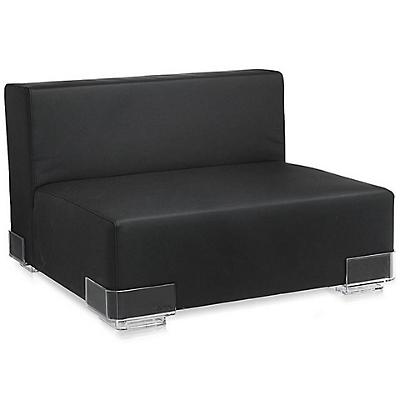
Choose from two-piece starter sets, three-piece L-shapes, four-piece U-shapes, or five-plus-piece modular systems. The Plastics collection by Kartell demonstrates how individual components combine into custom arrangements.
Delivery Considerations
White-glove delivery includes room placement and packaging removal—essential for large sectionals. Confirm doorway clearances (typically requiring 32"+ width) and stairway access before ordering. Modular pieces offer easier navigation through tight spaces than single-unit designs.
Warranty & Care
Premium manufacturers offer 5-10 year frame warranties and 1-3 year cushion coverage. Request fabric care codes (W for water-based cleaners, S for solvent-based) and leather conditioning recommendations at purchase.
Elevate Your Space with Black Sectional Sophistication
Black sectional sofas deliver enduring style that transcends fleeting trends, offering the perfect canvas for evolving decor preferences. Whether you're furnishing a compact apartment with a sleek two-piece configuration or anchoring a sprawling family room with an expansive modular system, our collection provides solutions for every spatial challenge and aesthetic vision. From the butter-soft leather of Herman Miller's Luva series to the architectural precision of Knoll's Matic designs, each piece reflects our commitment to exceptional craftsmanship and timeless design.
Shop the latest trends and styles of sectionals and discover how the right piece transforms your living room into a refined sanctuary that adapts to your evolving design vision.
SectionalsFrequently Asked Questions
Are sectionals out of style?
Sectionals remain timeless and continue to be a popular choice due to their versatility, comfort, and adaptability to various interior designs. Their ability to offer ample seating makes them ideal for families or those who frequently entertain.
Expert Tip: Sectionals are evolving rather than disappearing. The most current designs feature modular components with reversible chaises and movable ottomans that transform from L-shape to U-shape configurations. Look for low-profile arms (under 25" tall) that maintain clean sightlines in open-concept spaces.
Are leather couches good for dogs?
Leather couches are often an excellent choice for pet owners. High-quality leather is durable, resistant to stains, and easy to clean, making it ideal for households with dogs. However, to maintain appearance, regular maintenance and choosing leather with a protective finish is recommended.
Expert Tip: Top-grain leather with an aniline finish actually improves with light scratching - the natural patina adds character. For heavy chewers, look for semi-aniline leathers with subtle protective coatings that resist punctures while maintaining breathability.
What sizes do sectionals come in?
Sectional sofas are available in various sizes, from compact designs suitable for smaller apartments to expansive configurations that comfortably seat large gatherings. Common sectional lengths range between 80 inches for small sofas up to over 160 inches for larger setups.
Expert Tip: The most versatile sectionals have 72"-84" main chaise sections with 30"-36" wide corner seats. This creates comfortable seating for 4-5 adults while allowing the pieces to be reconfigured as your space evolves.
What are the different types of sectional sofa?
Common sectional types include L-shaped, U-shaped, modular, chaise, and reclining sectionals. L-shaped sectionals fit neatly into corners, while U-shaped styles offer ample seating for larger spaces. Modular sectionals allow customization, chaise sectionals add comfort, and reclining sectionals enhance relaxation.
Expert Tip: Modular sectionals with uniform depth (typically 38"-40") throughout offer the most flexibility. Avoid "fixed arm" designs - instead choose models where every piece can serve as an armless or arm-ended component.
What is a good size sectional?
A good sectional size depends on room dimensions. Typically, smaller rooms accommodate sectionals around 80 to 100 inches long, while larger spaces benefit from sectionals 120 inches or longer. Ensure enough walking space—usually 18 to 24 inches—around the sofa.
Expert Tip: Allow at least 42" between your sectional and coffee table for comfortable legroom. In open floor plans, position the back of the sectional 36"-48" from walls or other furniture to create natural walkways.
What is the best color for a sectional sofa?
Neutral colors such as gray, beige, navy, or charcoal are considered best for sectional sofas due to their timeless appeal and versatility. These colors adapt easily to evolving interior design trends and can be accented with vibrant pillows or throws.
Expert Tip: Medium-value neutrals (think warm grays or taupe) hide everyday wear better than very light or dark hues. For longevity, choose a color that matches your home's trim work - this creates a cohesive backdrop for changing accent colors.
What is the best material for a sectional sofa?
High-quality leather, microfiber, performance fabrics, and linen-blends are among the best materials for sectional sofas. Leather is durable and luxurious; microfiber and performance fabrics resist stains and wear, making them suitable for families; and linen-blends offer casual elegance.
Expert Tip: Crypton and other performance fabrics now rival natural materials for luxury feel while offering superior stain resistance. Look for double-rubbed fabrics rated at 50,000+ Wyzenbeek tests for true durability.
Do I need a right or left facing sectional?
Choosing between right- or left-facing sectional depends on room layout and personal preference. Facing direction is determined by which side the chaise or extended section is positioned when facing the sofa from the front. Select the orientation that complements your space and traffic flow.
Expert Tip: Before choosing, tape out both configurations on your floor. The optimal orientation keeps the chaise extension perpendicular to natural room pathways, never blocking flow.
How do you store a sectional couch?
To store a sectional couch, first detach individual pieces. Protect each segment with furniture covers or blankets, and ideally store vertically to maximize space. Store cushions separately in a cool, dry area to prevent moisture buildup and damage.
Expert Tip: When storing, place moisture-absorbing silica packets between cushions and wrap frames in breathable cotton covers - plastic traps humidity that can damage both upholstery and wood.
What is the standard height of a sectional sofa?
The standard height of a sectional sofa ranges from 30 to 36 inches at the backrest. Seating heights are typically around 17 to 20 inches. Taller backs provide greater support, while lower profiles offer a modern aesthetic.
Expert Tip: The ideal seat height (18"-20") allows feet to rest flat on the floor with knees at 90 degrees. For taller individuals, look for models with adjustable feet that can raise the height up to 2".
Who makes the best quality sofas?
Top brands known for producing high-quality sofas include Gus Modern, Blu Dot, Herman Miller, American Leather, and Natuzzi. These manufacturers offer well-crafted sofas combining excellent construction, durable materials, and contemporary style.
Expert Tip: Beyond big names, look for manufacturers using traditional joinery like double-doweled corners and mortise-and-tenon frames - these techniques distribute weight evenly and prevent sagging.
What are the different types of couches?
Different couch types include sectionals, loveseats, chaise lounges, sleeper sofas, reclining sofas, and settees. Each style suits various space requirements, seating needs, and interior designs.
Expert Tip: Consider a "chair-and-a-half" (48"-54" wide) as a versatile middle ground between loveseats and sofas - perfect for curling up with a book while still accommodating occasional guests.
What are the best types of sofa?
The best sofa types for comfort, durability, and style include sectional sofas for ample seating, leather sofas for elegance and durability, sleeper sofas for multifunctional spaces, and performance-fabric sofas for busy households.
Expert Tip: For households with children, tight-back sofas with attached cushions eliminate gaps where crumbs accumulate, while still offering firm support for movie nights.
Should I get a sofa or loveseat?
Choosing between a sofa and loveseat depends on space and seating needs. Sofas typically seat three or more people, making them ideal for larger rooms and families. Loveseats seat two comfortably and are perfect for smaller spaces or as additional seating.
Expert Tip: In small spaces, a 72" apartment-size sofa often provides more flexible seating than a loveseat, especially when paired with an accent chair that can be moved as needed.
How many people can sit on a couch vs a sofa?
Typically, sofas comfortably seat three to four adults, while couches or loveseats usually accommodate two. Larger sectionals can seat five or more, depending on their configuration and length.
Expert Tip: Allow 24" of width per person for comfortable seating, 18" for occasional use. A standard 84" sofa thus seats 3-4 adults comfortably, not the 4-5 often claimed.
What is a small sofa called?
A small sofa is commonly referred to as a loveseat or settee. These compact seating solutions comfortably fit two people and are perfect for smaller spaces or as complementary seating in larger rooms.
Expert Tip: The term "settee" originally referred to long benches with arms and backs - today's versions often feature elegant carved details that elevate small spaces with traditional charm.
 Back To Top