Outlets





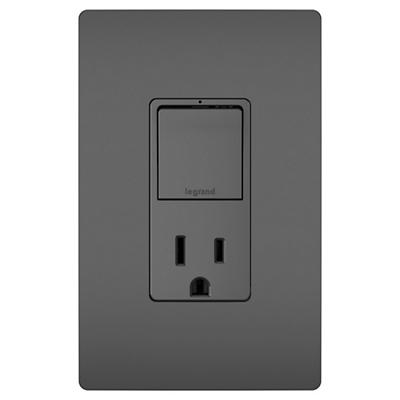
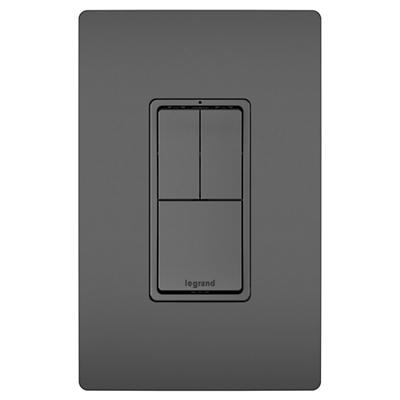

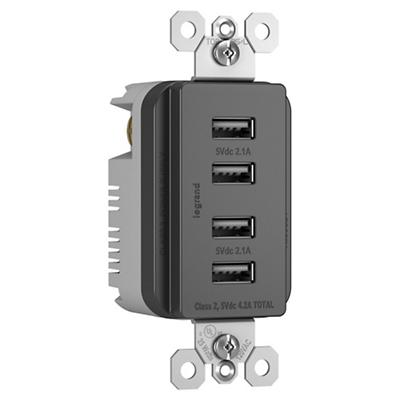
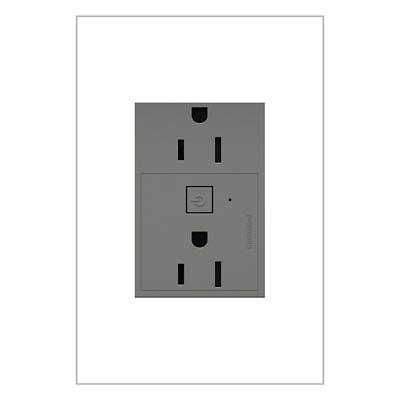




OutletsFrequently Asked Questions
What is a lighting outlet and how is it used?
A lighting outlet is a point in the electrical system where a light fixture is connected to the wiring and controlled by a wall switch. Unlike a standard receptacle used for plug-in devices, a lighting outlet is intended for permanent or semi-permanent luminaires such as ceiling lights, pendants, chandeliers, or wall sconces. A lighting outlet typically terminates in a ceiling box or wall box rated to support the fixture's weight and to contain wire splices. You use a lighting outlet by installing a compatible fixture and connecting it to a switch loop so the light can be turned on and off safely. In short, the lighting outlet is the junction where branch-circuit wiring meets your luminaire, making it the dedicated connection point for room illumination.
Expert Tip: The box itself — not the fixture — is what actually gets a weight rating. A ceiling box rated for a light fixture is typically only good for up to 50 lbs, while a fan-rated box is required for anything heavier or for any ceiling fan; swapping a pendant for a fan later without upgrading the box is a common inspection failure.
How do I install a lighting outlet in a room?
Plan the location based on room layout, furniture, and desired illumination. Turn off power at the breaker. Mount an appropriately rated electrical box (ceiling or wall) where the lighting outlet will go. Run cable from the switch location to the box, leaving enough conductor length for safe splicing. Use cable clamps and secure the box to framing. At the switch box, install a single-pole or three-way switch as needed. At the lighting outlet box, connect the hot (typically black) to the fixture hot lead via the switch leg, the neutral (white) to the fixture neutral, and bond all grounds (bare/green) to the box and fixture strap. Cap connections with listed wire connectors, tuck wires carefully, and attach the fixture per manufacturer instructions. Restore power and test. If you are unfamiliar with codes or load calculations, consult a licensed electrician to ensure the lighting outlet is properly installed and supported.
Expert Tip: Always pull a few extra inches of conductor into the box before splicing. Code sets a minimum free-conductor length for a reason — a box that's tight on wire is exactly the kind that gets rushed and mis-terminated when the fixture finally goes up.
Can I convert an electrical outlet to a lighting outlet?
In many cases, yes. You can repurpose an existing receptacle location by removing the receptacle, installing a blank cover or a fixture canopy, and reconfiguring the wiring so it is controlled by a wall switch. However, this must comply with code: required receptacle spacing in living areas cannot be compromised, and the box must be rated for fixture support if a luminaire will be mounted. If converting a half-switched receptacle circuit, you may already have a switch loop available. Otherwise, you may need to run a new cable from a switch to the box to create a proper lighting outlet. When in doubt, have an electrician verify conductor count, box fill, and structural support before converting a standard outlet into a lighting outlet.
Expert Tip: Check box fill before assuming a conversion is simple — a receptacle box is often sized for fewer conductors than a lighting outlet ends up needing once you add a switch leg and grounding jumpers, and an overfilled box is a code violation even if the wiring itself is correct.
Where should lighting outlets be placed in a living room?
Position the primary ceiling lighting outlet near the room's center or above the main seating area for balanced ambient light. Add wall-mounted lighting outlets for sconces to provide layered illumination and reduce glare. If using multiple fixtures, space lighting outlets to avoid dark corners, typically 6–8 feet apart for small accent lights or based on the fixture beam spread. Consider a dedicated lighting outlet above coffee tables or dining nooks within open-concept spaces. Place switch-controlled lighting outlets so they correspond with entry points, using three-way switches for rooms with multiple doorways. Always maintain clearances from combustible materials and ensure each lighting outlet is supported by an appropriately rated box and framing.
Expert Tip: Layout designers often rough in the ceiling box a few inches off the geometric center of the room to align with the true visual center once furniture, rugs, and sightlines from the main entry are factored in — a perfectly centered fixture can look off if the room's furniture layout is asymmetric.
What brands of outlets does Lumens carry?
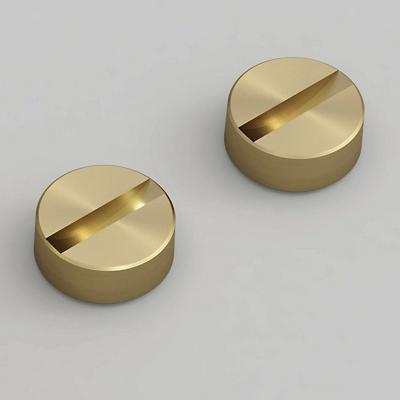
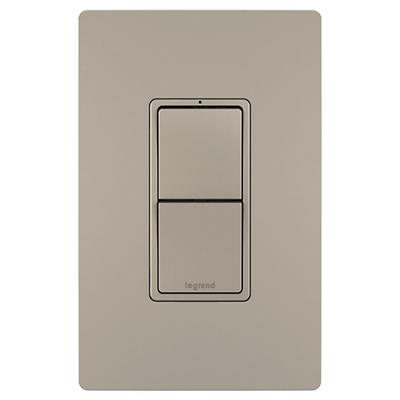
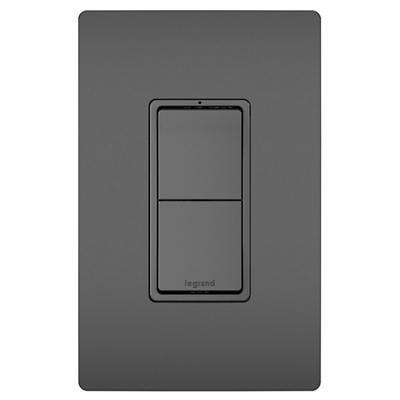
Lumens' Outlets collection includes products from Legrand Adorne, Buster + Punch, Prado, and Ethnicraft, covering everything from budget spec-grade receptacles to premium design-forward pieces.
Expert Tip: Legrand Adorne and Buster + Punch use their own proprietary faceplate and module systems, so mixing and matching parts across brands generally won't work — pick a system early in a project and standardize on it room-by-room to avoid ordering mismatched wall plates later.
What's the difference between a standard outlet and a GFCI receptacle?
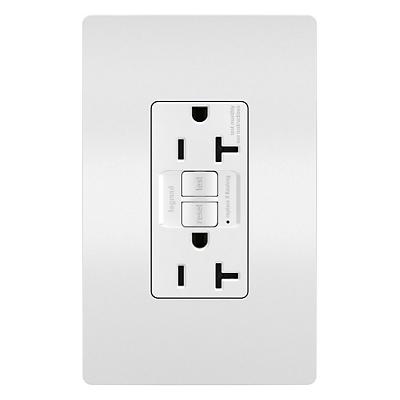
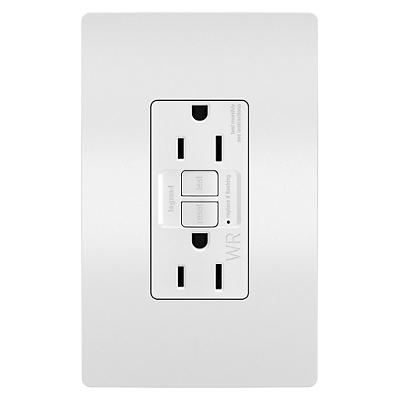
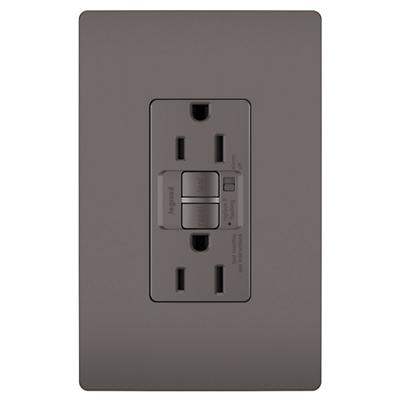
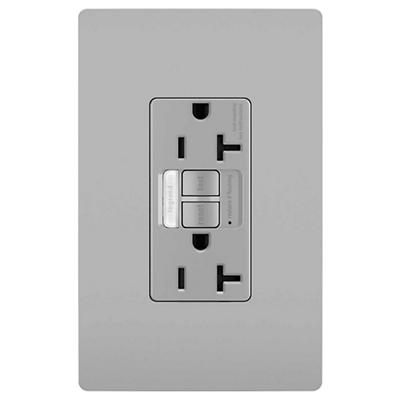
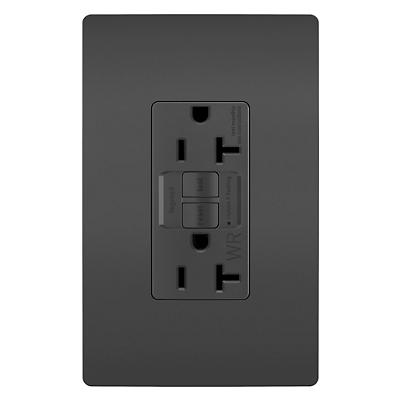
A standard outlet simply delivers power, while a GFCI (ground-fault circuit interrupter) receptacle — such as the Radiant Spec Grade Self-Test GFCI models — cuts power instantly if it detects a ground fault, protecting against shock.
Expert Tip: Electrical code requires GFCI protection in "wet" and outdoor-adjacent areas like kitchens, bathrooms, garages, and exteriors — and the newer "self-test" models Lumens carries continuously test their own internal circuitry, which matters because a large share of older GFCIs silently fail and stop protecting long before anyone notices.
Can I charge my phone directly from these outlets?
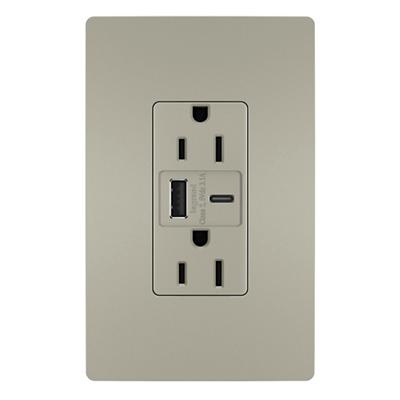
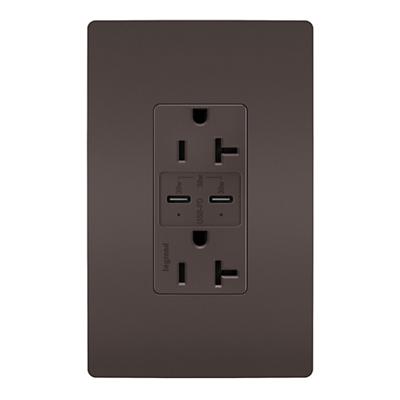
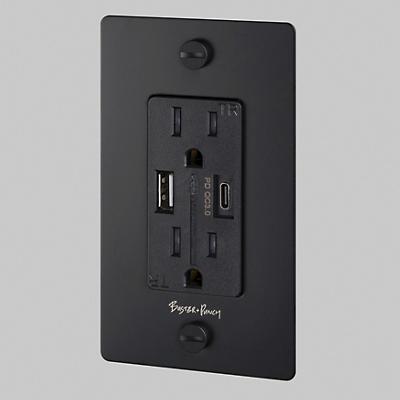
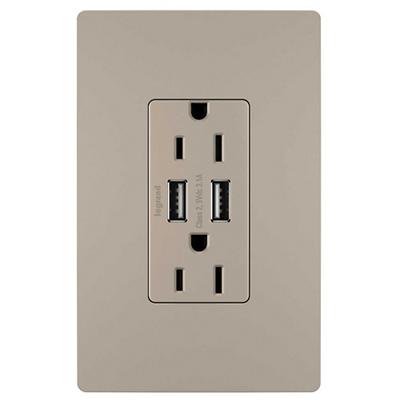
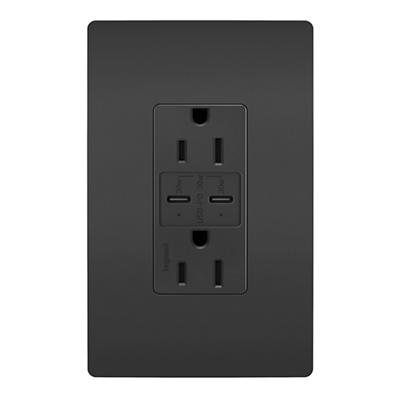
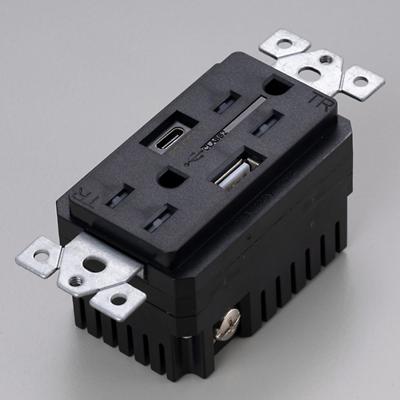
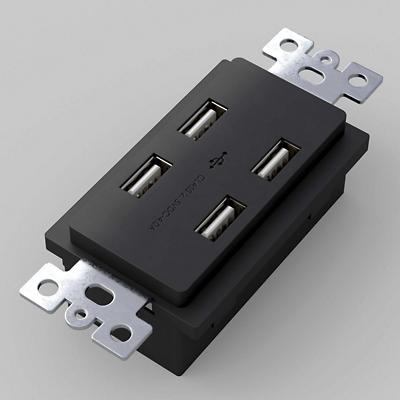
Yes. Several outlets, including the Radiant 20A Tamper Resistant Outlet with USB Type C Ports and Buster + Punch's Duplex USB A+C Outlet, have USB-A and/or USB-C ports built into the receptacle so you can charge without a wall adapter.
Expert Tip: Built-in USB ports draw from the same circuit, and their charging chips can become outdated faster than the outlet itself — many pros install a module-based system (like Buster + Punch or Legrand) precisely so the USB insert can be swapped out later without rewiring the whole box.
What does "tamper resistant" mean on these outlets?
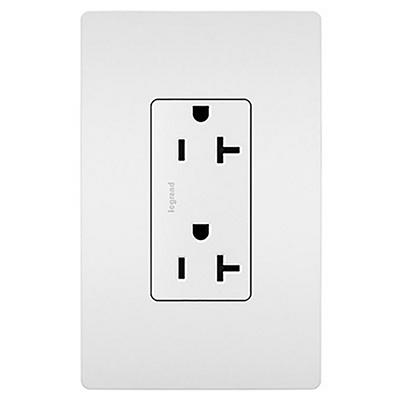
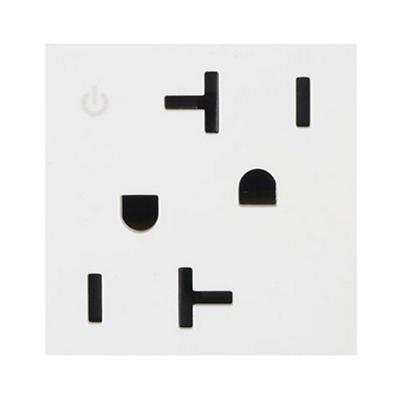
Tamper-resistant outlets have internal spring-loaded shutters that block foreign objects from being inserted into the slots, a safety feature designed largely to protect children.
Expert Tip: Tamper-resistant receptacles are now required by code in most new residential installations, so choosing them isn't just optional child-proofing — installing standard outlets in a new build can actually fail inspection.
Why are some outlets sold without a cover plate or as separate modules?
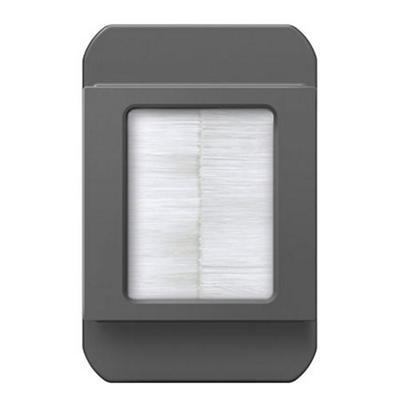
Products like the Prado Unifit outlets "without Cover Plate" and Buster + Punch modules are part of modular systems where the functional insert and the decorative faceplate are purchased separately.
Expert Tip: This modular approach is how designers get a seamless look across a wall — you can run outlets, switches, and USB ports in one continuous frame — but always confirm you've added the matching frame and plate to your cart, since the "outlet" listing alone often won't power on or mount without them.
What's the price range for outlets in this collection?
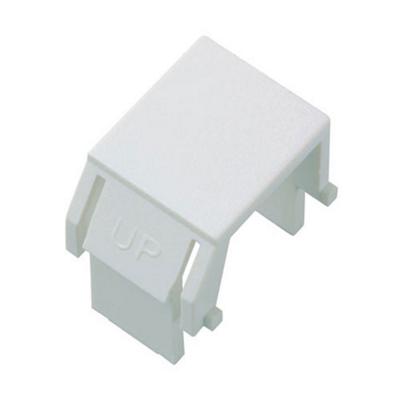
Prices span from roughly $3 for small accessories like the Blank Keystone Insert and 4-Port Keystone Frame up to $319 for the Ethnicraft Power Circle, with most functional outlets falling between about $20 and $224.
Expert Tip: The big price jumps here are almost entirely about finish and design rather than electrical performance — a $6 spec-grade Legrand outlet and a $200+ Buster + Punch outlet can carry the same amperage rating, so reserve the premium pieces for visible walls and use the economical ones where they'll be hidden behind furniture.
What amperage should I choose — 15A or 20A?
The collection offers both 15-amp and 20-amp outlets; 20A models handle higher-draw appliances and are commonly specified for kitchens and workshops, while 15A suits general-purpose rooms.
Expert Tip: The outlet's amperage must match the circuit breaker and wire gauge feeding it — putting a 20A receptacle on a 15A circuit is a common DIY mistake that creates a false sense of capacity and a genuine safety hazard, so verify the breaker before you buy.
Is there a current discount on any outlets?
Yes — Prado's Unifit outlets and keystone holder are marked as on sale at 25% off with promo code DESIGN25, and you can filter the collection for in-stock, ready-to-ship, and new-arrival items.
Expert Tip: On electrical categories like this, "ready to ship" is worth filtering for even when you're not in a hurry — outlet lines are frequently reformulated or discontinued to meet updated code, and matching a discontinued module or faceplate months later for a repair is often impossible.

 Back To Top