Black Modern Track Lighting


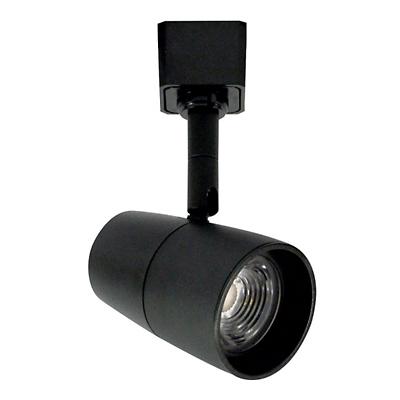
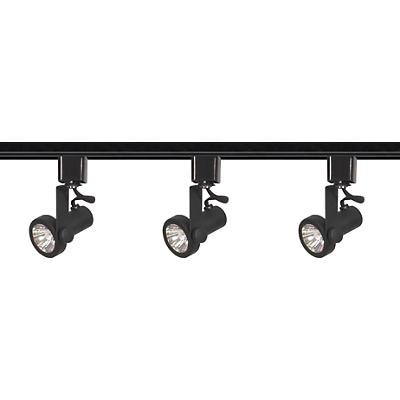
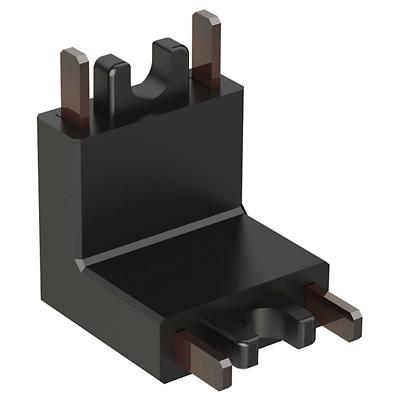


Track Lighting Explore
Why We Love Black Track Lighting
One of the greatest assets of modern track lighting is the ability to position and direct the light where you most need it to go. You have serious control over the intensity of the lighting and can easily accentuate some artwork or really brighten up an important corner of the room. As a flexible lighting style, black track lighting can uniquely function as task lighting or mood lighting. These light fixtures are fairly easy to install and coordinate nicely with your existing décor. Track lights in many different styles allow you to add a touch of sleek sophistication to your home.
Where Black Track Lighting Works Best
The versatility of black monorail lighting makes it a great choice for so many spaces in the home. Where to hang track lighting may also depend on the effect you are looking to create. You can highlight artwork or a home accent, create a wall washing effect or even set off a reading corner or other special space. Use contemporary track lighting in the kitchen above the island or counter to create superb task lighting for your cooking needs. Add a touch of drama to your dining room or living room with elegant track lights. Modern track lighting also works beautifully in bedrooms, bathrooms and even hallways for a unique take on home illumination. Anywhere you can accommodate a linear or flexible track system, you'll be sure to enjoy the lighting element it offers the room.
Black Track Lighting for Every Style
Ever versatile, black track lighting is available in a wide array of styles to suit just about any interior motif. Designs by WAC Lighting feature directional track heads in many shapes and sizes, offering wall wash and accent lighting effects with choices that are suitable for low voltage as well as line voltage setups. Ultra eye-catching, modern fixtures are the signature of Tech Lighting, a brand that is sure to outfit your home in true sophistication. And paying homage to the timeless past, Bruck Lighting introduces throwback styles that add dazzling brilliance to your favorite spaces.You'll especially appreciate the line of LED track lighting options available in the Bruck assortment.
How to Choose the Best Black Track Lighting
When selecting modern track lighting for the home, keep in mind where you will install the lights. Once you know the location, you can be a better judge of the proper size for your lighting. Ensure that your options match your home's needs as far as line voltage and low voltage power. You'll also want to look at the design of the rail, as some are straight while others are curvy to adapt to varying ceiling styles. Diverse styles of black monorail lighting, particularly in the shape and size of track heads, allow you to customize a look that is just right for your space, ensuring the proper length and light intensity for your needs. Finally, be sure to select the right light source (halogen, incandescent, LED) and lumen output for your specific lighting application. If you have any questions about the black finished track light fixtures featured here, please call our lighting experts at 877.445.4486.
Other Great Options
If you like the sophisticated and streamlined appearance of black track lighting, you should also consider other flexible track lighting options for the home. Add a hint of edgy flair with industrial track lighting that commands attention with its powerful and dramatic presence. Likewise, rustic track lighting adds an immediately noticeable element to your lighting scheme you and your home's guests will be sure to appreciate. Lastly, remember to look into installing a dimmer switch to ensure your lighting is responsive and easily adaptable to your needs.
Track LightingFrequently Asked Questions
What Is Track Lighting?
Track lighting is a system in which individual light fixtures, called heads, attach to a continuous electrified rail mounted on the ceiling. Each head can be repositioned along the rail and aimed independently, providing adjustable directional light from a single power source. Track systems are used for ambient, task, and accent lighting across residential and commercial spaces.
Expert tip: Track lighting is one of the few fixture types that lets you redirect light without any rewiring, making it ideal for spaces that change over time.
What Is The Difference Between H-Track, J-Track, And L-Track?
H-track, J-track, and L-track refer to different rail connector standards. H-track (also called 3-circuit or Halo-type) is the most common in residential applications and supports the widest range of compatible heads. J-track (Juno-type) uses a slightly different connector profile but is also widely available. L-track (Lightolier-type) uses a two-circuit design. These systems are not interchangeable: heads designed for one track type will not fit another without an adapter.
Expert tip: Before purchasing new heads, check the track type already installed in your space. The connector shape at the base of the head is the simplest way to identify compatibility.
Can Track Lighting Be Dimmed?
Yes, most track lighting can be dimmed when paired with compatible components. LED track heads must be rated as dimmable, and the dimmer switch must be designed for LED loads. Using an incompatible dimmer can cause flickering, buzzing, or reduced dimming range.
Expert tip: For the smoothest dimming performance, use an LED-specific dimmer rated for the total wattage of all heads on the track. ELV (electronic low-voltage) dimmers tend to perform best with LED track heads.
What Beam Angle Should I Choose?
Beam angle determines how light spreads from each head. Narrow spots (10 to 20 degrees) create focused pools ideal for highlighting individual objects, artwork, or architectural features. Medium floods (25 to 40 degrees) work well for task lighting over counters and desks. Wide floods (45 to 60 degrees) provide general ambient illumination across broader areas.
Expert tip: In most rooms, combining two or three different beam angles on the same track creates the most balanced and visually interesting lighting.
How Many Track Heads Do I Need Per Foot Of Track?
A general guideline is one track head for every 12 to 18 inches of track for accent lighting, or one head per 24 inches for ambient illumination. A 4-foot track section, for example, typically supports two to four heads depending on the application. Spacing also depends on beam angle: narrower beams require closer spacing to avoid dark gaps between pools of light.
Expert tip: Start with fewer heads and add as needed. It is easier to fill in a gap than to correct overlapping light that creates hot spots.
Can I Mix Track Heads From Different Brands?
You can mix heads from different manufacturers as long as they share the same track standard (H, J, or L). However, mixing brands sometimes introduces slight differences in connector fit, finish tone, or head proportion. For the most cohesive appearance, select heads within the same product family or finish line.
Expert tip: If mixing brands, bring a sample head to compare finish and scale before committing. Slight variations in "matte black" or "brushed nickel" between manufacturers are common.
Is Track Lighting Suitable For Sloped Ceilings?
Yes. Most track systems can be mounted on ceilings with slopes up to 45 degrees using angled mounting hardware or sloped ceiling adapters. Track heads with full 360-degree rotation and 90-degree pivot allow you to aim light straight down even when the rail itself is angled. For steeper vaults, suspended track on adjustable stems maintains a level rail below the ceiling plane.
Expert tip: On sloped ceilings, position the track on the lower portion of the slope so heads can aim light into the room rather than toward the upper wall.
What Are The Benefits Of LED Track Lighting?
LED track heads consume 50 to 80 percent less energy than halogen equivalents while producing comparable or superior light output, typically 600 to 1,200 lumens per head. They generate significantly less heat, which is important when illuminating temperature-sensitive artwork or in low-clearance ceiling applications. LED heads also offer consistent color temperature (commonly available from 2700K to 4000K) and high CRI ratings of 90 or above for accurate color rendering.
Expert tip: Look for LED track heads with integrated drivers rather than separate transformers. Integrated designs simplify installation and produce a cleaner visual profile along the rail.
