Beige Modern Nightstands & Bedside Tables













Nightstands & Bedside Tables Explore
Beige Nightstands
Beige nightstands bring quiet sophistication to the bedroom, balancing warmth with versatility in ways that pure white or dark wood cannot. This neutral foundation works across design styles—from Scandinavian minimalism to coastal elegance—while offering the perfect backdrop for layered textures and metallic accents. At Lumens, our curated collection of beige nightstands spans materials from matte lacquer to oak veneer, linen-wrapped designs to marble-topped statements, ensuring you'll find the ideal bedside companion that elevates your space without overwhelming it.
Understanding Beige Nightstands in Contemporary Design
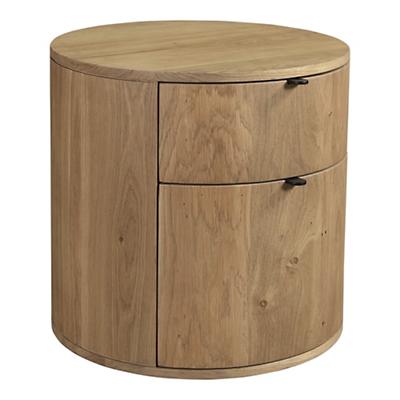
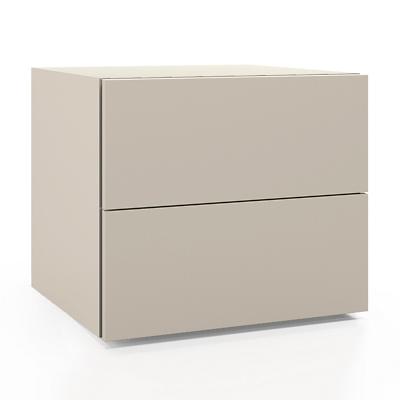
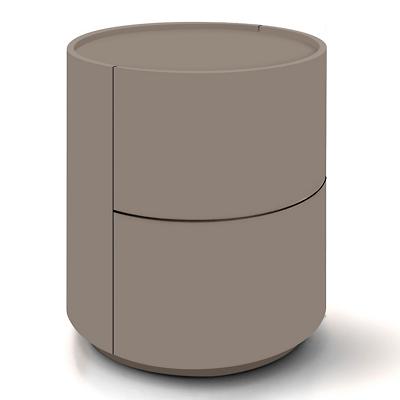
Beige nightstands encompass a spectrum of warm neutrals—from sandy oak and natural maple to taupe lacquer and cream marble. The Pianca People 2 Drawer Nightstand in Beige Matte Lacquer exemplifies this category's refined aesthetic, while the Four Hands Trey Nightstand in Dove Poplar showcases how natural wood grains add depth to neutral palettes. These pieces work seamlessly in modern, transitional, and coastal interiors, providing visual warmth without the heaviness of darker woods. Beige finishes reflect light beautifully, making them particularly effective in smaller bedrooms or spaces with limited natural light.
Beige Nightstand Materials & Finishes
Matte Lacquer: Delivers a contemporary, seamless appearance with easy maintenance. The smooth surface resists fingerprints while offering a sophisticated, gallery-like quality. Simply wipe with a soft, damp cloth to maintain the finish.
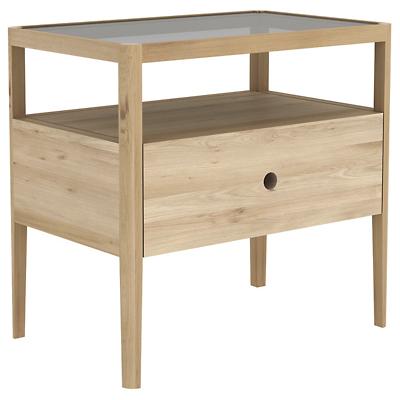
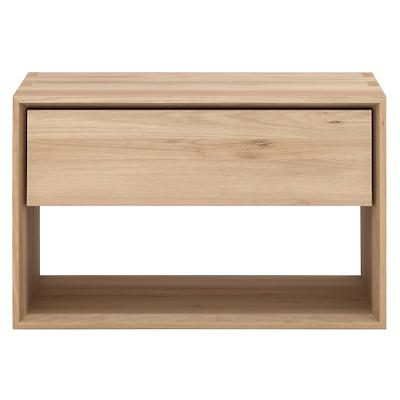
Natural Wood Veneers: Oak, maple, and poplar veneers in beige tones showcase organic grain patterns. The Ethnicraft Nordic II Bedside Table in Oak demonstrates how wood's natural variation adds character. These finishes require occasional wood conditioning but age gracefully.
Linen & Fabric-Wrapped: The Four Hands Chiro Nightstand in Ivory Painted Linen introduces texture and tactile appeal. Fabric finishes benefit from regular vacuuming with an upholstery attachment and spot-cleaning as needed.
Marble-Topped: Combining beige bases with marble surfaces, like the Four Hands Raleigh Nightstand in Cappuccino Marble, adds luxury and contrast. Seal marble annually to prevent staining.
Sizing Beige Nightstands for Your Bed
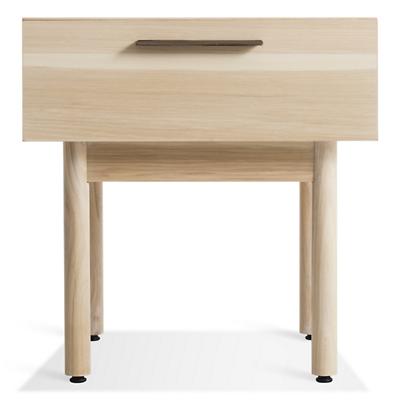
The ideal nightstand height positions the top surface within 1–2 inches of your mattress top—typically 24–28 inches for standard beds. For king beds, consider wider nightstands (24–30 inches) like the Four Hands Trey Large Nightstand to maintain visual balance. Queen beds pair well with 20–24 inch widths, while full beds accommodate more compact 18–20 inch options like the Blu Dot Shale Bedside Table in Hickory.
Depth considerations: Standard 16–18 inch depths provide ample surface area without protruding into walking paths. Measure your bedroom's clearance—maintain at least 24 inches between the bed and nightstand for comfortable movement.
Style Variations in Beige Nightstands
Scandinavian Minimalism: Clean lines, light woods, and functional simplicity define this aesthetic. The BDI KAVA Nightstand in Washed Oak offers integrated cord management and soft-close drawers.
Mid-Century Modern: Tapered legs, organic shapes, and warm woods characterize this enduring style. Look for pieces with subtle brass hardware and geometric drawer fronts.
Coastal Contemporary: Lighter beige tones with natural textures evoke seaside serenity. The Classic Home Laguna Nightstand in Natural captures this relaxed elegance.
Transitional Elegance: Blending traditional craftsmanship with contemporary proportions, options like the Copeland Furniture Sarah 2 Drawer Nightstand in Natural Maple bridge multiple design eras.
Mixing Beige Nightstands with Other Finishes
Mismatched nightstands create visual interest when executed thoughtfully. Pair one beige nightstand with a complementary wood tone—walnut or oak—to add dimension without clashing. The key is maintaining similar scale and style language. A beige lacquer nightstand balances beautifully against a matte black counterpart in modern spaces, while beige wood veneers harmonize with natural rattan or cane pieces in coastal settings.
With beige or cream beds: Prevent flatness by introducing contrasting elements—marble tops, brass hardware, or darker wood accents. Layer textures through linen bedding, woven throws, and varied surface materials. The Four Hands Ashton Nightstand with Cream Marble demonstrates how material contrast elevates monochromatic schemes.
Storage Solutions & Smart Features
Drawer configurations: Single-drawer designs suit minimalists, while two or three drawers accommodate more storage needs. The Pianca People 3 Drawer Nightstand maximizes vertical storage in compact footprints.
Soft-close mechanisms: Premium options include dampened drawer glides that close silently—essential for early risers or late-night readers.
Integrated charging: Look for nightstands with built-in USB ports or wireless charging pads concealed within drawers. Cord management systems keep cables organized and surfaces clutter-free.
Floating vs. freestanding: Wall-mounted floating nightstands save floor space and facilitate cleaning, ideal for smaller bedrooms. Freestanding pieces offer greater storage capacity and flexibility in placement.
Styling Beige Nightstands with Hardware & Lighting
Hardware finishes: Brass and warm gold accents complement beige's warm undertones, creating cohesive, sophisticated schemes. Matte black hardware provides striking contrast on lighter beige finishes, while brushed nickel or chrome suits cooler-toned beiges.
Lighting pairings: Table lamps in complementary materials anchor the nightstand. Consider ceramic bases in textured whites, clear glass for airiness, or aged brass for warmth. Scale matters—lamp bases should be proportional to nightstand width, typically one-third to one-half the surface width.
Layered styling: Balance function with aesthetics by grouping essentials (alarm clock, reading glasses) in decorative trays. Add height variation with small plants, books, or sculptural objects.
Beige Nightstand Investment Guide
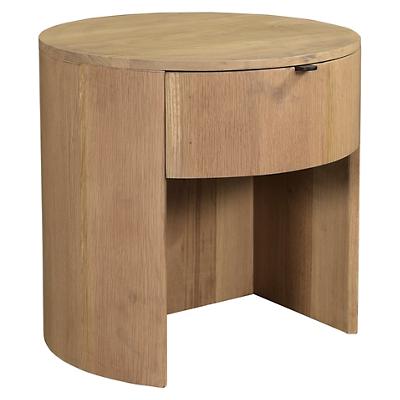
$500–$800 range: Expect quality veneers, standard drawer glides, and solid construction. The Moe's Home Collection Theo Two Drawer Nightstand offers excellent value with natural oak construction.
$800–$1,200 range: Upgrades include soft-close mechanisms, premium lacquers, and designer details. Better joinery and more durable finishes justify the investment.
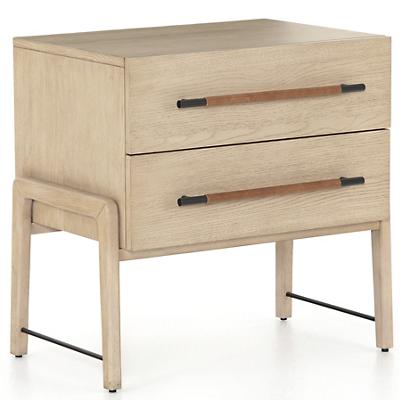
$1,200–$1,800+ range: Premium materials like solid wood construction, marble surfaces, and artisan craftsmanship distinguish high-end pieces. The Four Hands Aramis Nightstand in Sandy Oak Resawn showcases museum-quality woodwork and finishing.
Consider cost-per-year: A $1,500 nightstand lasting 15+ years costs less annually than replacing $500 pieces every five years. Evaluate based on material quality, construction methods, and finish durability.
Conclusion
Beige nightstands deliver timeless versatility, adapting to evolving bedroom aesthetics while providing essential bedside functionality. Whether you're drawn to the minimalist appeal of matte lacquer, the organic warmth of natural wood veneers, or the luxurious contrast of marble-topped designs, our collection offers solutions for every style preference and budget. From compact floating options to substantial three-drawer designs with integrated charging, these pieces prove that neutral doesn't mean ordinary.
Ensure you'll find the perfect bedside table whether furnishing a minimalist studio or a sprawling primary suite.
Nightstands & Bedside TablesFrequently Asked Questions
Are nightstands lower than beds?
Ideally, nightstands should be level with or slightly higher or lower (by 2-4 inches) than the top of your mattress. This height ensures easy access to bedside essentials and creates visual harmony in your bedroom.
Expert Tip: The perfect nightstand height matches your mattress height when you're sitting up in bed. Test this by sitting on your bed and resting your arm comfortably - your nightstand surface should be at elbow height for optimal usability.
How do you pick a nightstand color?
Select a nightstand color that complements your existing décor and furniture. Matching nightstands to the bed frame or bedroom set offers a cohesive look, while contrasting colors add visual interest and personality.
Expert Tip: Create depth in your bedroom by choosing nightstands one shade darker or lighter than your bed frame. For bold beds (navy, black), try neutral nightstands with metallic hardware that picks up other room accents.
Do people still use end tables?
Yes, end tables remain popular in modern interiors. They offer practical storage and display space in living rooms, bedrooms, and family rooms, complementing other furniture pieces and enhancing convenience.
Expert Tip: Modern end tables are evolving with built-in USB ports and wireless charging pads. In bedrooms, they work well as secondary surfaces when placed opposite a traditional nightstand, especially in rooms with reading chairs.
What is kept in a sideboard?
Sideboards typically store dining essentials like dishes, glassware, table linens, and serving utensils. However, in a bedroom, a sideboard can function similarly to a dresser, storing clothing or personal items.
Expert Tip: When using a sideboard as a bedroom storage piece, outfit deep drawers with dividers for folded sweaters or scarves. The top surface becomes perfect for displaying perfume collections or jewelry boxes with everyday accessories.
Do you always need two nightstands?
Two nightstands provide symmetry, balance, and additional storage, making them ideal for shared or larger bedrooms. However, using just one nightstand works well in smaller spaces or asymmetrical room layouts.
Expert Tip: In small bedrooms, replace one nightstand with a wall-mounted shelf or narrow console table behind the door. This maintains functionality while saving 18+ inches of precious floor space.
What are the different types of nightstands?
Nightstands come in various styles, including open-shelf nightstands, drawer nightstands, cabinet nightstands, and multifunctional bedside tables with integrated charging stations. Each type offers distinct benefits for storage and convenience.
Expert Tip: Open-shelf nightstands visually expand small rooms, while closed storage models hide medications or sleep aids. For small spaces, consider a floating nightstand with just 12" depth - it leaves room to walk but still holds essentials.
What is the average size of a bedroom nightstand?
Typical nightstand dimensions range from 20–28 inches tall, 18–24 inches wide, and 16–20 inches deep. Selecting the right size ensures convenient accessibility and balanced aesthetics in your bedroom.
Expert Tip: Proportion matters most - your nightstand should be roughly the same width as your bed's arm (if visible) or about 1/3 of your bed's total width. For king beds, this often means 24" wide nightstands.
What is the best nightstand height?
The ideal nightstand height aligns with the top of your mattress or is within a few inches above or below it (generally between 24–28 inches). This height offers comfortable access while in bed.
Expert Tip: Adjustable bed owners should choose nightstands 2" lower than their highest mattress position. Platform beds often need taller nightstands (28-30") while canopy beds look best with lower profiles (22-24").
What is the best material for a nightstand?
Wood is a classic, durable choice for nightstands, offering long-lasting quality and timeless appeal. Metal or glass materials suit contemporary aesthetics, while engineered wood or MDF provides budget-friendly durability.
Expert Tip: Solid wood tops resist water rings from drinks, while metal bases simplify cleaning in tight spaces. For children's rooms, consider wipeable lacquered finishes that handle stickers and markers.
What is the best color for a nightstand?
Neutral shades like white, black, gray, or natural wood finishes are popular for nightstands, as they complement various bedroom styles and color palettes. Accent colors can add personality and visual contrast.
Expert Tip: Light-reflecting colors (white, pale gray) make small bedrooms feel larger when used on nightstands. In dark rooms, try a nightstand with a mirrored front to bounce light around.
What do you put on the bottom shelf of a nightstand?
The bottom shelf of a nightstand is ideal for items you use less frequently, such as books, magazines, decorative storage boxes, or personal items neatly arranged for accessibility and visual appeal.
Expert Tip: Use the bottom shelf for next-day essentials - lay out folded clothes, pack your work bag, or place a tray with morning vitamins and a water carafe to streamline your routine.