
Modern Track Lighting
Shop Track Lighting by Type
VIEW ALL TRACK LIGHTING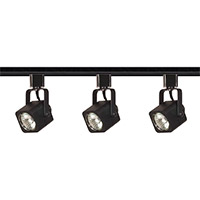
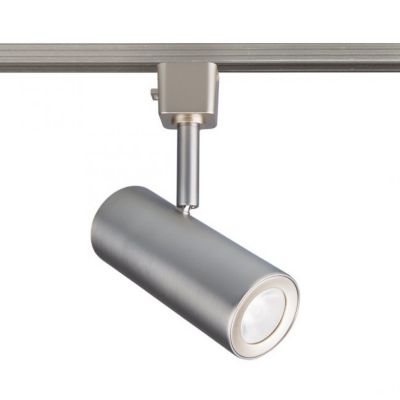


Learn More About Track Lighting |
Modern Track Lighting
Key Benefits And Features
• Directional Precision: Track lighting allows you to aim individual heads exactly where light is needed, putting artwork, countertops, and architectural details in sharp focus with beam angles ranging from 15 to 60 degrees.
• Modular Flexibility: Add, remove, or reposition track heads along a single electrified rail without rewiring, making it one of the most adaptable lighting systems available for evolving spaces.
• Layered Illumination: Combine narrow-spot and wide-flood heads on the same track to create ambient, task, and accent lighting from a single fixture, reducing the need for multiple ceiling penetrations.
• Architectural Integration: Low-profile track rails mount flush to the ceiling or suspend on stems, complementing modern architecture rather than competing with it. Recessed track options virtually disappear into the ceiling plane.
• Energy Efficiency: LED track heads deliver 600 to 1,200 lumens per head while consuming a fraction of the energy of halogen predecessors, with rated lifespans of 25,000 to 50,000 hours.
The Art Of Track Lighting
Track lighting occupies a distinctive place in the lighting design canon: part infrastructure, part creative instrument. Where a chandelier commands a room from a fixed point, a track system invites ongoing composition. Its modular architecture allows designers and homeowners to orchestrate light across a space with the same intentionality an art director brings to a gallery. Each head becomes a point of emphasis, directing the eye toward texture, color, or form. The best track systems achieve this quietly. A well-designed rail reads as a clean architectural line, while the heads themselves range from sculptural silhouettes to near-invisible cylinders. This restraint is precisely what gives track lighting its power: it foregrounds what it illuminates rather than itself. For open-concept living, where a single ceiling must serve cooking, dining, lounging, and display, track lighting brings order without rigidity. It is the thinking designer's solution to the question of how to light a space that refuses to stay the same.
Track Lighting For Every Room
Living Rooms And Open-Concept Spaces
Best for creating defined zones within fluid floor plans. Use a combination of wide-flood heads (40 to 60 degree beam angle) for ambient wash and narrow-spot heads (15 to 25 degrees) to highlight art or shelving. In open-concept layouts, run parallel tracks to establish visual boundaries between living and dining areas. Space heads 18 to 24 inches apart for even general illumination, and position accent heads 30 degrees off-axis from the wall to minimize glare on framed artwork.
Kitchens
Best for delivering focused task lighting over islands, countertops, and prep surfaces. Mount track parallel to the counter edge, approximately 24 inches from the wall, to direct light onto the work surface rather than casting your shadow. Heads with a 25 to 36 degree beam angle concentrate light where cutting, measuring, and plating take place. For kitchen islands, a single linear track centered over the island with three to four heads spaced 12 to 16 inches apart provides clean, even illumination without the visual weight of a pendant cluster.
Hallways And Galleries
Best for transforming transitional spaces into curated visual experiences. In hallways, a single track run along the ceiling centerline with adjustable heads angled toward walls creates a gallery-like wash that adds depth and dimension. For framed work, use narrow-spot heads (15 to 20 degrees) positioned at a 30 degree aiming angle from the ceiling to illuminate each piece without reflection on glass. Space heads to align with artwork placement rather than at fixed intervals.
Home Offices And Studios
Best for supporting precision work and video-call-ready lighting. Position track perpendicular to your line of sight to avoid screen glare. A combination of one wide-flood head for ambient fill and two to three narrow heads for task zones (desk surface, reference shelving, drafting area) creates a layered lighting environment. For studios and creative workspaces, select heads with a high CRI (90 or above) to ensure accurate color rendering of materials and finishes.
Retail And Commercial Spaces
Best for highlighting merchandise and guiding customer flow through a space. Commercial track systems support higher wattage heads and heavier-duty connectors. Use narrow-spot heads (12 to 15 degrees) to create dramatic pools of light on featured products, and wider beams for pathway and general illumination. Track's modularity makes it straightforward to reconfigure lighting for seasonal displays and new layouts without calling an electrician.
Materials And Finishes
Matte Black
Matte black track and heads create graphic contrast against light ceilings, reading as a deliberate design element rather than a utilitarian fixture. This finish anchors contemporary and industrial interiors, pairing naturally with exposed concrete, steel framing, and dark-stained wood. In gallery and retail settings, matte black recedes visually, keeping the focus on illuminated objects.
Brushed Nickel And Chrome
Brushed nickel softens reflected light with its subtle grain, making it a versatile choice for kitchens, bathrooms, and transitional interiors where a warmer metallic tone is preferred. Chrome, by contrast, delivers a mirror-bright finish that reads as distinctly modern. Both pair well with stainless steel appliances, polished hardware, and cool-toned palettes.
Brass And Gold
Brass and gold-toned finishes bring warmth and visual weight to track systems, offering an unexpected point of contrast in spaces dominated by cooler materials. Aged or satin brass carries a lived-in refinement that suits mid-century and transitional interiors. Polished brass makes a bolder statement, introducing a sense of occasion to dining areas, libraries, and entryways.
Satin White
Satin white track blends into standard white ceilings, making the system nearly invisible. This finish is ideal when the lighting design should feel architectural rather than decorative. White track works especially well in minimalist interiors, residential galleries, and spaces where competing visual elements need room to breathe.
Distinctive Styles
Modern And Minimalist
Modern track lighting distills the fixture to its essential geometry: clean cylinders, slim rectangular heads, and rails with minimal profile. These systems draw from the Bauhaus principle that form follows function, using restrained silhouettes and monochromatic finishes to create lighting that feels integrated into the architecture. Look for heads with seamless housings and concealed hardware for the most refined expression.
Industrial
Industrial track lighting embraces the raw honesty of exposed mechanical systems. Larger head profiles, visible pivot mechanisms, and finishes like matte black, raw steel, and oil-rubbed bronze reference the warehouse and studio origins of track lighting itself. These fixtures pair with exposed ductwork, brick walls, and concrete floors, reinforcing an aesthetic rooted in material authenticity.
Mid-Century
Mid-century track heads often feature tapered conical or bullet-shaped housings, drawing from the organic modernism of the 1950s and 1960s. Brass, walnut accents, and warm metallic finishes connect these fixtures to the era's emphasis on natural materials and sculptural form. The result is track lighting with personality: functional, but with a distinct point of view.
Transitional
Transitional track systems bridge contemporary simplicity and classical proportion. Softened edges, mixed-finish heads (brushed nickel rail with brass accents, for example), and moderately scaled profiles make these fixtures adaptable across a wide range of interiors. They work particularly well in homes where design vocabulary shifts from room to room, providing continuity without strict stylistic uniformity.
Track lighting transforms the relationship between a space and the objects within it, offering a level of creative control that few other fixture categories can match. Its modular nature means your lighting can evolve alongside your space, adapting to new art, new furniture, and new ideas. Shop the latest modern lighting, furniture, and decor collections at https://www.lumens.com/
Track Lighting FAQs
What Is Track Lighting?
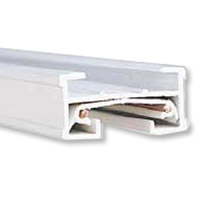
Track lighting is a system in which individual light fixtures, called heads, attach to a continuous electrified rail mounted on the ceiling. Each head can be repositioned along the rail and aimed independently, providing adjustable directional light from a single power source. Track systems are used for ambient, task, and accent lighting across residential and commercial spaces.
Expert tip: Track lighting is one of the few fixture types that lets you redirect light without any rewiring, making it ideal for spaces that change over time.
What Is The Difference Between H-Track, J-Track, And L-Track?
H-track, J-track, and L-track refer to different rail connector standards. H-track (also called 3-circuit or Halo-type) is the most common in residential applications and supports the widest range of compatible heads. J-track (Juno-type) uses a slightly different connector profile but is also widely available. L-track (Lightolier-type) uses a two-circuit design. These systems are not interchangeable: heads designed for one track type will not fit another without an adapter.
Expert tip: Before purchasing new heads, check the track type already installed in your space. The connector shape at the base of the head is the simplest way to identify compatibility.
Can Track Lighting Be Dimmed?
Yes, most track lighting can be dimmed when paired with compatible components. LED track heads must be rated as dimmable, and the dimmer switch must be designed for LED loads. Using an incompatible dimmer can cause flickering, buzzing, or reduced dimming range.
Expert tip: For the smoothest dimming performance, use an LED-specific dimmer rated for the total wattage of all heads on the track. ELV (electronic low-voltage) dimmers tend to perform best with LED track heads.
What Beam Angle Should I Choose?
Beam angle determines how light spreads from each head. Narrow spots (10 to 20 degrees) create focused pools ideal for highlighting individual objects, artwork, or architectural features. Medium floods (25 to 40 degrees) work well for task lighting over counters and desks. Wide floods (45 to 60 degrees) provide general ambient illumination across broader areas.
Expert tip: In most rooms, combining two or three different beam angles on the same track creates the most balanced and visually interesting lighting.
How Many Track Heads Do I Need Per Foot Of Track?
A general guideline is one track head for every 12 to 18 inches of track for accent lighting, or one head per 24 inches for ambient illumination. A 4-foot track section, for example, typically supports two to four heads depending on the application. Spacing also depends on beam angle: narrower beams require closer spacing to avoid dark gaps between pools of light.
Expert tip: Start with fewer heads and add as needed. It is easier to fill in a gap than to correct overlapping light that creates hot spots.
Can I Mix Track Heads From Different Brands?
You can mix heads from different manufacturers as long as they share the same track standard (H, J, or L). However, mixing brands sometimes introduces slight differences in connector fit, finish tone, or head proportion. For the most cohesive appearance, select heads within the same product family or finish line.
Expert tip: If mixing brands, bring a sample head to compare finish and scale before committing. Slight variations in "matte black" or "brushed nickel" between manufacturers are common.
Is Track Lighting Suitable For Sloped Ceilings?
Yes. Most track systems can be mounted on ceilings with slopes up to 45 degrees using angled mounting hardware or sloped ceiling adapters. Track heads with full 360-degree rotation and 90-degree pivot allow you to aim light straight down even when the rail itself is angled. For steeper vaults, suspended track on adjustable stems maintains a level rail below the ceiling plane.
Expert tip: On sloped ceilings, position the track on the lower portion of the slope so heads can aim light into the room rather than toward the upper wall.
What Are The Benefits Of LED Track Lighting?
LED track heads consume 50 to 80 percent less energy than halogen equivalents while producing comparable or superior light output, typically 600 to 1,200 lumens per head. They generate significantly less heat, which is important when illuminating temperature-sensitive artwork or in low-clearance ceiling applications. LED heads also offer consistent color temperature (commonly available from 2700K to 4000K) and high CRI ratings of 90 or above for accurate color rendering.
Expert tip: Look for LED track heads with integrated drivers rather than separate transformers. Integrated designs simplify installation and produce a cleaner visual profile along the rail.