Mid Century Modern Modern Outdoor Benches






Outdoor Benches Explore
Mid Century Modern Outdoor Benches
Mid century modern outdoor benches bring the iconic design language of the 1950s and 60s into contemporary outdoor living spaces. Defined by clean lines, organic forms, and functional simplicity, these benches merge sculptural beauty with practical durability. Whether you're furnishing a poolside lounge, creating intimate dining nooks, or adding seating to garden pathways, our curated collection spans powder-coated metal frames, sustainably sourced teak, and weather-resistant materials in authentic MCM silhouettes. From Knoll's wire-frame classics to vibrant RS Barcelona designs, each piece honors the era's commitment to form, function, and craftsmanship.
Understanding Mid Century Modern Outdoor Benches
Authentic mid century modern outdoor benches showcase signature design elements: tapered legs, geometric frames, and minimal ornamentation that emphasize material integrity. The Bertoia Bench, Outdoor by Knoll exemplifies this aesthetic with its sculptural wire construction—originally designed in 1952, it remains an icon of the movement. Look for benches with slat construction like Barlow Tyrie's Linear Outdoor Bench, which channels classic MCM proportions in durable teak. The hallmark of genuine mid century style is restraint: no excessive embellishment, just honest materials and thoughtful engineering that ages gracefully outdoors.
Style Variations in Mid Century Modern Outdoor Benches
MCM outdoor benches range from minimalist wire frames to warm wood platforms, each interpreting the era's design principles:
• Wire & Metal Frames: The Bertoia Bench's stainless steel or powder-coated construction offers airy, sculptural seating
• Teak Classics: Barlow Tyrie's Monaco and London benches feature horizontal slat patterns and natural teak that weathers to silver patina
• Colorful Powder-Coat: RS Barcelona's Seu Outdoor Bench delivers bold hues—from Traffic White to Emerald Green—in durable steel with 20+ finish options
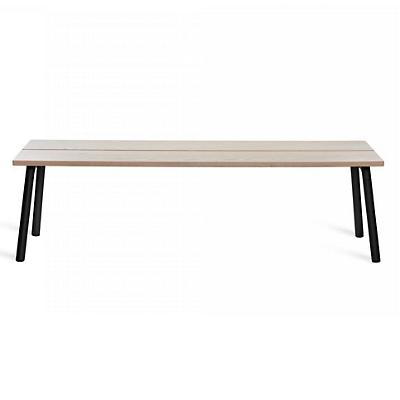
• Hybrid Designs: Emeco's Run Bench pairs black aluminum frames with Ash, Cedar, or Accoya wood tops for coastal resilience
• Woven Accents: Innit Designs' Pelopin Bench wraps vinyl cord around steel frames in playful colors, echoing Acapulco chair aesthetics
Each style works in different contexts—wire benches suit modern courtyards, teak anchors traditional gardens, and vibrant powder-coat energizes poolside areas.
Materials & Finishes Built for Outdoor Durability
Material choice determines longevity and maintenance requirements. Teak remains the gold standard for outdoor benches—Barlow Tyrie's sustainably harvested teak naturally resists rot and insects, requiring no treatment if you prefer the silvered patina. Oil annually to maintain golden tones. Powder-coated aluminum and steel offer zero-maintenance color retention; RS Barcelona's RAL finishes resist UV fading and salt corrosion, ideal for coastal installations. Accoya wood, featured in Emeco's Run Bench, undergoes acetylation for superior dimensional stability in humid climates—it won't warp or crack like untreated lumber. Stainless steel, as seen in the Bertoia Bench, delivers industrial elegance and withstands year-round exposure without covers. For vibrant, fade-resistant seating, Fermob's Sixties Bench uses matte-textured powder coat in Cactus, Red Ochre, and Liquorice—colors that hold up season after season.
Sizing Your Mid Century Modern Outdoor Bench
Bench length should align with your seating needs and spatial constraints. 50–53 inch benches like the Sixties or Seu Square comfortably seat two adults, perfect for small patios or apartment balconies without overwhelming the footprint. 59–63 inch options—including the Linear and London benches—accommodate three people and pair well with 6-person dining tables. 74–79 inch benches such as the Titan or Monaco suit 8-person dining configurations or entryway statements. 86+ inch models like the extended Seu Bench create dramatic poolside lounging.
For dining applications, allow 24 inches of width per person and ensure 12–18 inches of clearance between bench edge and table for comfortable entry. Backless benches tuck fully under tables; backed models like the Layout Outdoor Bench require additional clearance but offer lumbar support for extended meals. Weight capacity varies—wire benches typically support 400–500 pounds, while solid teak frames handle 600+ pounds across multiple seats.
Placement & Installation Best Practices
Dining areas: Position benches 18 inches from table edges for easy sliding in and out. Backless designs maximize flexibility—guests access from either side. The Redondo Outdoor Dining Bench by Sunset West includes cushions for 2+ hour comfort during entertaining.
Entryways & pathways: Place 3–4 feet from doorways to create welcoming transition zones. The Monaco Swing Bench adds kinetic charm to covered porches, requiring 6 feet of clearance for safe swinging radius.
Poolside & lounge: Backless benches like the Pelopin double as casual seating and towel platforms. Position 3+ feet from pool edges for safety compliance.
Garden focal points: Anchor benches on level surfaces—pavers, concrete, or compacted gravel—to prevent tipping on soft soil. The Sissinghurst's traditional teak profile suits English garden aesthetics, while colorful RS Barcelona pieces pop against modern xeriscaping.
Most mid century outdoor benches arrive fully assembled or require minimal leg attachment. Teak benches benefit from annual cleaning with mild soap and water; apply teak oil if maintaining golden color. Powder-coated frames need only occasional hosing. Cushioned models like the Redondo should be stored indoors during winter or covered with breathable fabric to prevent mildew.
Choosing the Right Mid Century Modern Outdoor Bench
Navigate our collection by prioritizing your primary use case. For dining, select backed or backless based on table clearance and comfort preferences—the Run Bench's modular top materials (Ash, Cedar, Walnut, Accoya) let you match existing furniture. For small spaces, compact 50-inch models in neutral finishes maximize versatility. For bold statements, RS Barcelona's 20-color palette and Innit's cord weaves inject personality into monochromatic landscapes.
Budget considerations: Expect $500–$900 for powder-coated steel and vinyl cord benches, $1,600–$2,500 for quality teak, and $2,300–$3,600 for designer icons like the Bertoia or teak swing benches. Higher prices reflect premium materials, artisan craftsmanship, and proven weather resistance. The Titan's marine-grade construction justifies its investment for oceanfront properties, while the accessible Pelopin delivers MCM flair at entry-level pricing.
Climate-specific picks: Coastal buyers should prioritize stainless steel (Bertoia), Accoya wood (Run Bench), or powder-coated aluminum (Layout, Seu) for salt-air resilience. Rainy climates favor teak's natural water resistance or quick-drying slatted designs. Sun-intense regions benefit from fade-proof powder coats and UV-stabilized cushion fabrics.
Why Mid Century Modern Outdoor Benches Endure
The timeless appeal of mid century modern outdoor benches lies in their honest materiality and human-centered proportions. These designs emerged when architects and furniture makers collaborated to extend indoor living outdoors—a philosophy that resonates in today's emphasis on seamless indoor-outdoor transitions. Fermob's Sixties Bench pays homage to French Riviera leisure, while Barlow Tyrie's teak collection continues British garden traditions with Scandinavian simplicity. Each piece in our collection balances sculptural presence with functional comfort, whether you're hosting al fresco dinners or creating quiet reading nooks. The versatility of MCM design means these benches complement contemporary minimalism, bohemian eclecticism, and traditional landscapes alike—their clean lines serve as neutral anchors or colorful accents depending on your finish choice.
Elevate Your Outdoor Living with Iconic Design
Mid century modern outdoor benches transform patios, gardens, and poolsides into curated extensions of your interior aesthetic. Our collection spans authentic reproductions, contemporary interpretations, and artisan-crafted originals—each selected for durability, design integrity, and timeless appeal. From the wire elegance of Knoll's Bertoia to the sustainable teak of Barlow Tyrie and the vibrant customization of RS Barcelona, you'll find benches that honor mid century principles while meeting today's performance standards. Explore materials that weather gracefully, finishes that resist fading, and silhouettes that seat guests comfortably for decades.
Create inviting moments throughout your landscape with thoughtfully designed outdoor benches that blend comfort, durability, and timeless style.
Outdoor BenchesFrequently Asked Questions
How do you weatherproof an outdoor bench?
Weatherproofing an outdoor bench typically involves applying a sealant, waterproof coating, or specialized outdoor paint to protect against moisture, UV rays, and temperature fluctuations. Regularly reapplying the sealant will extend the life of the bench.
Expert Tip: Use a UV-resistant sealant to prevent fading and cracking caused by sun exposure. For wooden benches, apply a waterproof finish annually to maintain durability.
What size is a standard garden bench?
A standard garden bench usually measures about 4 to 6 feet in length, 18 to 20 inches deep, and around 18 inches high from the seat to the ground, providing comfortable seating for two to three people.
Expert Tip: For small gardens, choose a compact bench (around 4 feet long) to save space while still offering comfortable seating.
How do you secure a bench to a patio?
To secure a bench to a patio, anchor it to the surface using L-brackets, concrete anchors, or bolts. This ensures the bench remains stable and secure, especially in windy or high-traffic areas.
Expert Tip: Use stainless steel hardware to prevent rust and corrosion, ensuring long-lasting stability.
How long does a wooden bench last?
With proper maintenance, a wooden outdoor bench can typically last between 10 to 20 years or more, depending on the type of wood, climate exposure, and protective treatments applied.
Expert Tip: Choose hardwoods like teak or cedar for natural durability and resistance to rot and insects.
How long do stone benches last?
Stone benches are extremely durable and can last for several decades—often over 50 years or more—with minimal maintenance, thanks to their natural resistance to weathering and deterioration.
Expert Tip: Place stone benches in shaded areas to prevent them from becoming too hot to sit on during sunny days.
What can I use for an outdoor bench?
Common materials for outdoor benches include wood (like teak, cedar, or eucalyptus), metal (aluminum, iron), stone (granite, concrete), and synthetic materials (polyethylene, resin). Each material offers different benefits in terms of durability, aesthetics, and maintenance requirements.
Expert Tip: For coastal areas, choose aluminum or teak benches to prevent corrosion from salt air.
What is the best outdoor bench color?
The best color for an outdoor bench usually complements your outdoor space. Neutral tones like white, gray, brown, or natural wood finishes blend seamlessly with various surroundings and landscapes.
Expert Tip: Use colorful cushions or throws to add personality to a neutral bench without committing to a bold color.
What is the standard size of a patio bench?
A standard patio bench generally measures about 4 to 6 feet long, with a depth of 18 to 20 inches, and a seat height around 18 inches, comfortably seating two to three adults.
Expert Tip: For larger patios, consider a 6-foot bench with built-in storage for added functionality.
How do you finish a wooden outdoor bench?
Finishing a wooden bench involves sanding, cleaning, and applying an exterior-grade stain, paint, or clear sealant. Regular reapplication every few years helps maintain the wood’s integrity and appearance.
Expert Tip: Use a UV-resistant sealant to prevent fading and maintain the bench’s appearance over time.
How do you weatherproof an outdoor wooden bench?
Weatherproof an outdoor wooden bench by applying water-resistant sealants, varnishes, or outdoor paints. Regular reapplication of protective finishes ensures the bench remains in good condition.
Expert Tip: Apply a waterproof cover during the off-season to further protect your bench from the elements.
What is the standard height of an outdoor bench?
The standard seat height for outdoor benches is typically between 16 to 18 inches above the ground, providing comfort for adults of average height.
Expert Tip: For taller individuals, consider a bench with a seat height of 18-20 inches for added comfort.
How do you maintain an outdoor bench?
Maintain an outdoor bench by regularly cleaning it, inspecting for damage, and periodically applying protective finishes or sealants. Covering the bench or placing it under shelter during harsh weather also extends its lifespan.
Expert Tip: Use a soft-bristle brush to clean textured surfaces like wicker or recycled plastic, ensuring you don’t damage the material.

 Back To Top