Brass Modern Track Lighting

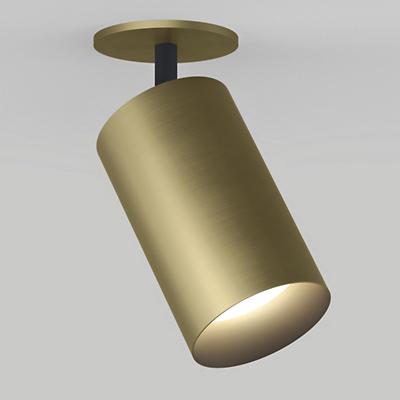

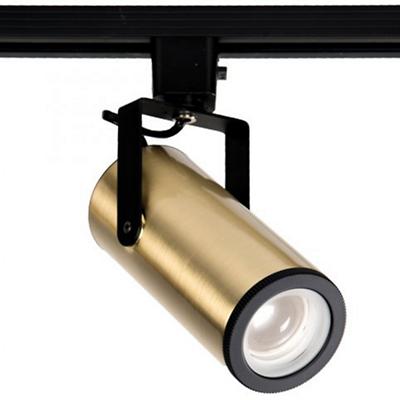

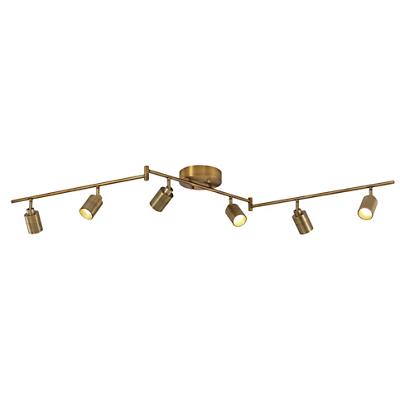
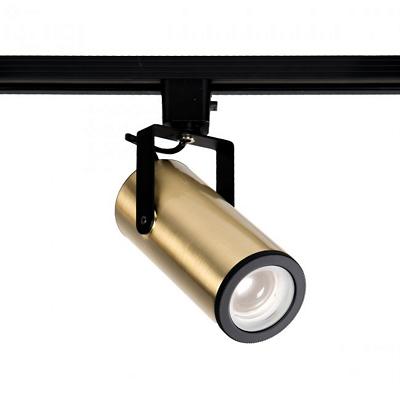



Track Lighting Explore
Why We Love Brass Track Lighting
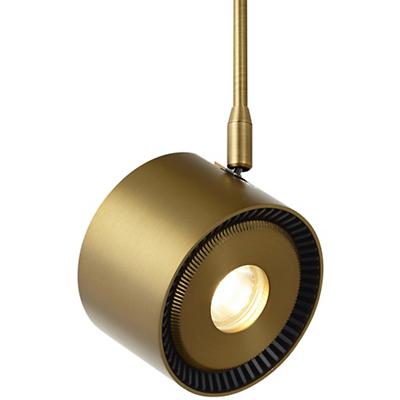
Track lighting is a classic solution to the difficult problem of finding home lighting that is ambient, accent, and task lighting all in one. Brass track lighting takes this functional idea and adds a statement style that stands out with its aesthetically pleasing finish. Not only will these fixtures provide you with ample lighting for whatever you need, but the beautiful brass finish will also help create a cohesive design feel throughout your home as well. Pair them with a dimmer to gain complete control of their shine, or let them glisten and gleam at their brightest. Available in energy-efficient 12-volt track lighting options, brass track lighting could be the answer to your pleas for practical and polished lighting.
Where Brass Track Lighting Fixtures Work Best
As is the nature of track lighting, brass track lighting fixtures work best in large rooms where you can really appreciate their multifunctional glow. Installed in kitchens, these lights provide the perfect illumination for precision tasks like chopping veggies and baking delicious desserts, and act a simple yet stunning continuation of your style. Take advantage of the wide glow of modern brass track lighting and introduce them in a great room with vaulted ceilings where they’ll cast a welcoming shine that’s perfect for sitting back and relaxing, watching TV, and reading. For other sloped ceiling options, browse alternative styles of sloped ceiling track lighting.
Favorite Types of Brass Track Lights
Brass track lighting fixtures are available in a variety of different styles. From classic track head lighting to hanging pendants, these stylish lights bring something new to the table with their chic finishes. More familiar shapes harmonize well with traditional homes, while exotic profiles like hanging hexagonal pendants make a stunning statement in modern dwellings. We love options that incorporate additional textures, like clear glass or wood finishes, to mix things up a little. There’s no such thing as boring lighting with brass track lighting.
How to Choose the Best Brass Finish Track Lights
Traditional style brass track lighting is made of decorative directional heads that are perfect for accent lighting. However, the more exceptional pendant lighting style trades the directional lighting functional for appealing aesthetics. So if you want to use your lights for accent lighting, make sure you choose the appropriate style fixture. Check the bulb’s light output and consider installing a dimmer on if you expect them to provide soft ambient light.
Other Considerations
When dealing with any type of hanging fixture, pendant style brass track lighting included, focus on ceiling height and suspension length. Too high and the light will look awkward; Too low and you might hit your head on the light. Carefully plan and measure to avoid these mishaps. Copper track lighting and bronze track lighting will provide you with a similar feel. Bronze pairs best with rustic, farmhouse aesthetics and copper works well in both modern and rustic applications. For a more modern and contemporary color, browse our selection of black track lighting. The dark hues complement the cool tones of modern decor and the wide array of designs means they work with a variety of different, contemporary decor styles.
Track LightingFrequently Asked Questions
What Is Track Lighting?
Track lighting is a system in which individual light fixtures, called heads, attach to a continuous electrified rail mounted on the ceiling. Each head can be repositioned along the rail and aimed independently, providing adjustable directional light from a single power source. Track systems are used for ambient, task, and accent lighting across residential and commercial spaces.
Expert tip: Track lighting is one of the few fixture types that lets you redirect light without any rewiring, making it ideal for spaces that change over time.
What Is The Difference Between H-Track, J-Track, And L-Track?
H-track, J-track, and L-track refer to different rail connector standards. H-track (also called 3-circuit or Halo-type) is the most common in residential applications and supports the widest range of compatible heads. J-track (Juno-type) uses a slightly different connector profile but is also widely available. L-track (Lightolier-type) uses a two-circuit design. These systems are not interchangeable: heads designed for one track type will not fit another without an adapter.
Expert tip: Before purchasing new heads, check the track type already installed in your space. The connector shape at the base of the head is the simplest way to identify compatibility.
Can Track Lighting Be Dimmed?
Yes, most track lighting can be dimmed when paired with compatible components. LED track heads must be rated as dimmable, and the dimmer switch must be designed for LED loads. Using an incompatible dimmer can cause flickering, buzzing, or reduced dimming range.
Expert tip: For the smoothest dimming performance, use an LED-specific dimmer rated for the total wattage of all heads on the track. ELV (electronic low-voltage) dimmers tend to perform best with LED track heads.
What Beam Angle Should I Choose?
Beam angle determines how light spreads from each head. Narrow spots (10 to 20 degrees) create focused pools ideal for highlighting individual objects, artwork, or architectural features. Medium floods (25 to 40 degrees) work well for task lighting over counters and desks. Wide floods (45 to 60 degrees) provide general ambient illumination across broader areas.
Expert tip: In most rooms, combining two or three different beam angles on the same track creates the most balanced and visually interesting lighting.
How Many Track Heads Do I Need Per Foot Of Track?
A general guideline is one track head for every 12 to 18 inches of track for accent lighting, or one head per 24 inches for ambient illumination. A 4-foot track section, for example, typically supports two to four heads depending on the application. Spacing also depends on beam angle: narrower beams require closer spacing to avoid dark gaps between pools of light.
Expert tip: Start with fewer heads and add as needed. It is easier to fill in a gap than to correct overlapping light that creates hot spots.
Can I Mix Track Heads From Different Brands?
You can mix heads from different manufacturers as long as they share the same track standard (H, J, or L). However, mixing brands sometimes introduces slight differences in connector fit, finish tone, or head proportion. For the most cohesive appearance, select heads within the same product family or finish line.
Expert tip: If mixing brands, bring a sample head to compare finish and scale before committing. Slight variations in "matte black" or "brushed nickel" between manufacturers are common.
Is Track Lighting Suitable For Sloped Ceilings?
Yes. Most track systems can be mounted on ceilings with slopes up to 45 degrees using angled mounting hardware or sloped ceiling adapters. Track heads with full 360-degree rotation and 90-degree pivot allow you to aim light straight down even when the rail itself is angled. For steeper vaults, suspended track on adjustable stems maintains a level rail below the ceiling plane.
Expert tip: On sloped ceilings, position the track on the lower portion of the slope so heads can aim light into the room rather than toward the upper wall.
What Are The Benefits Of LED Track Lighting?
LED track heads consume 50 to 80 percent less energy than halogen equivalents while producing comparable or superior light output, typically 600 to 1,200 lumens per head. They generate significantly less heat, which is important when illuminating temperature-sensitive artwork or in low-clearance ceiling applications. LED heads also offer consistent color temperature (commonly available from 2700K to 4000K) and high CRI ratings of 90 or above for accurate color rendering.
Expert tip: Look for LED track heads with integrated drivers rather than separate transformers. Integrated designs simplify installation and produce a cleaner visual profile along the rail.

 Back To Top