Orange Modern Pendant Lighting & Hanging Lights



Pendant Lighting Explore
Orange Pendant Lighting
Orange pendant lighting transforms ordinary rooms into vibrant, energizing spaces with a bold splash of color. Whether you're looking for a statement piece above your kitchen island or a playful accent in a dining room, orange pendants deliver warmth and personality that neutral fixtures simply can’t match. From burnt orange tones that complement earth-toned interiors to bright tangerine shades that energize contemporary spaces, our curated collection offers styles ranging from sleek modern designs to artisanal handcrafted pieces. Explore how orange pendants can balance blue and gray palettes, add unexpected drama to minimalist kitchens, or create a focal point in transitional dining areas.
Understanding Orange Pendant Lighting Design
Orange pendant lighting occupies a unique position in modern interior design—offering warmth without the heaviness of red and vibrancy without the intensity of yellow. This color family spans from soft peach and terracotta to deep burnt orange and electric pumpkin, each shade creating distinctly different atmospheres. The PH 5 Pendant Light in Hues of Orange exemplifies how layered orange shades create dimensional lighting that’s both functional and sculptural. Orange works particularly well as an accent color because it naturally complements blue tones—making it ideal for spaces with navy cabinetry, denim upholstery, or cool-toned walls. When choosing orange pendant lighting, consider whether you want the fixture itself to be orange (painted metal, glass, or wood veneer) or if you prefer an orange interior that casts warm, glowing light.
Orange Pendant Style Variations
Modern & Contemporary: Sleek designs like the Semi Pendant by GUBI in glossy orange feature clean dome shapes with minimalist hardware. These work beautifully in Scandinavian or mid-century spaces where the orange becomes a deliberate pop of color against white walls and natural wood.
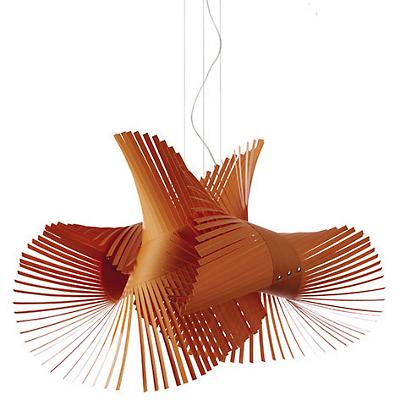
Artisanal & Handcrafted: Wood veneer pendants such as the Link Pendant by LZF in orange offer organic texture and warm illumination. The natural grain visible through the orange stain creates depth and visual interest, perfect for spaces that value craftsmanship.
Industrial Edge: The Urchin Pendant in Electric Pumpkin combines orange with spiky metal construction, bringing playful energy to loft spaces or modern kitchens with concrete and steel elements.
Glass & Transparency: Translucent orange glass pendants like the FL/Y Pendant by Kartell create a softer, diffused glow that’s less saturated than opaque orange shades—ideal when you want color without overwhelming brightness.
Materials & Finish Options for Orange Pendants
Orange pendant lighting comes in four primary material categories, each delivering different aesthetic and functional qualities:
Painted Metal: Offers the most saturated, consistent orange with options for matte or glossy finishes. Matte surfaces like those on the E27 Mini Pendant by Muuto minimize glare and hide fingerprints, while glossy finishes create mirror-like reflections that amplify light.
Wood Veneer: Natural cherry or beech with orange staining maintains visible grain patterns, creating warmth and texture. The Agatha Pendant by LZF demonstrates how orange-stained wood veneer produces a softer, more organic interpretation of the color.
Glass: Available in transparent orange, frosted, or hand-blown varieties. Glass pendants transmit more light than opaque materials—important to consider if you’re layering multiple pendants and need to control brightness.
Fabric & Felt: The BuzziShade Medium Pendant in orange felt provides acoustic benefits alongside color, making it ideal for open-concept spaces where sound dampening matters.
For the best orange pendant lights under $500, consider mini pendants or single medium-sized fixtures. Moving into the $1,000+ range typically brings larger scale, designer collaborations, hand-applied finishes, and premium materials like hand-blown glass or FSC-certified wood.
Sizing Orange Pendant Lighting for Your Space
Pendant sizing follows the “3:1 rule”—divide ceiling height by three to determine ideal fixture height. For a 9-foot ceiling, aim for approximately 30-inch fixtures. Over a 72-inch dining table, choose pendants between 20–24 inches in diameter, or use three smaller 12–14 inch pendants spaced evenly.
Kitchen Islands: For a standard 96-inch island, install three orange mini pendants spaced 30–32 inches apart, with the first pendant positioned 12 inches from the island’s edge. The Mini Mikado Pendant in orange works beautifully in this configuration, providing focused task lighting without overwhelming the space.
Dining Tables: Hang pendants 30–36 inches above the table surface—low enough to create intimacy but high enough that seated diners can see across the table comfortably. A single large orange pendant like the Swirl Pendant Light makes a dramatic statement over round tables.
Vaulted Ceilings: Orange pendants work on sloped ceilings with proper adapters. Many fixtures in our collection include sloped ceiling compatibility—check product specifications for this feature.
Placement & Installation Considerations
Height matters significantly with orange pendant lighting because the color naturally draws the eye. Standard installation places pendants 30–36 inches above countertops for kitchen islands, 30–34 inches above dining tables, and 6.5–7 feet from the floor in hallways or entryways.
Color Temperature Behind Orange Shades: Choose 2700K warm white LEDs for the most natural glow through orange materials. Higher color temperatures (3000K+) can create an unnatural peachy tone. Warm-dimming LEDs that shift from 3000K to 1800K as you dim provide maximum flexibility, allowing you to adjust the intensity of the orange glow based on time of day and mood.
Integrated LED vs. Bulb-Based: Integrated LED fixtures like the BuzziJet LED Pendant offer smooth dimming and maintenance-free operation for 50,000+ hours. Bulb-based fixtures provide flexibility to adjust color temperature and replace bulbs easily, but require compatible dimmers for flicker-free performance.
Lumens Output: Orange glass and translucent materials transmit 60–75% of light compared to clear glass. For kitchen task lighting, aim for 400–600 lumens per pendant. Dining areas need less—200–300 lumens creates ambient illumination without harsh brightness.
Orange Pendant Lighting & Interior Design
Orange pendants excel at balancing cool color schemes. In kitchens with gray cabinets and white countertops, orange pendants add necessary warmth. They complement blue beautifully—consider pairing orange pendants with navy walls or blue upholstery for a sophisticated contrast.
Mid-Century Modern: Orange was a defining color of 1960s design. Pair dome-shaped orange pendants with teak furniture and geometric patterns for authentic period style. The Williamsburg Custis Pendant with William of Orange shade offers a historically inspired take.
Scandinavian Spaces: Matte orange pendants work surprisingly well in Scandinavian interiors, adding warmth to white walls and light wood without disrupting the minimalist aesthetic. Choose simpler shapes like the Peterson Spherical Pendant in shiny orange.
Eclectic & Bohemian: Layer multiple orange pendants at varying heights with mixed materials—combine glass, metal, and wood for maximum visual interest. Orange pairs beautifully with terracotta, olive green, and mustard yellow in boho-inspired spaces.
Sustainable & Eco-Friendly Orange Pendant Options
Environmentally conscious shoppers can find orange pendant lighting with FSC-certified wood veneers, ensuring responsible forest management. LZF’s wood veneer pendants, including their orange options, use sustainably sourced materials and eco-friendly packaging. Look for fixtures with recyclable components—many metal and glass pendants can be fully recycled at end of life.
ENERGY STAR-certified integrated LED pendants reduce energy consumption by 75% compared to incandescent equivalents. The long lifespan of LED technology (typically 50,000 hours) means fewer replacements and less waste. Consider fixtures from B Corp-certified manufacturers that prioritize environmental and social responsibility throughout their supply chain.
Shopping Orange Pendant Lighting at Lumens
Our orange pendant collection spans 180+ fixtures across multiple designers and brands, from iconic pieces like the Louis Poulsen PH 5 to contemporary designs from emerging makers. Filter by size (mini pendants under 12 inches to large pendants over 24 inches), shape (dome, cone, drum, globe, abstract), and price point to find your perfect match.
Most orange pendants ship within 2–4 weeks, with select models available for immediate delivery. Our design consultants can help you choose the right shade of orange for your existing palette, calculate proper spacing for multiple pendants, and ensure compatibility with your dimming system. We offer free design consultations and detailed product specifications including lumens output, color temperature options, and installation requirements.
Whether you’re adding a single statement pendant or outfitting an entire kitchen island, orange pendant lighting brings energy, warmth, and personality to modern spaces.
See the full pendant lighting collection for thoughtfully crafted fixtures that elevate any space.
Pendant LightingFrequently Asked Questions
Are pendant lights in style?
Yes, pendant lights remain a stylish and versatile lighting option. Modern designs, such as minimalist metal pendants, glass globes, and geometric shapes, are particularly popular. They are widely used in kitchens, dining rooms, and entryways to add both functionality and aesthetic appeal.
Expert Tip: To keep your space on-trend, opt for pendant lights with integrated LED technology or customizable features like adjustable heights and dimmable settings.
How to choose a hanging light?
When choosing a hanging light, consider the size of the space, the fixture's purpose, and your decor style. For example, in a kitchen, select a pendant that provides focused task lighting over an island, while in a dining room, choose a statement piece that complements the table's size and shape.
Expert Tip: Use the "3:1 rule" for pendant sizing—divide the room's height by 3 to determine the ideal fixture height. For example, a 9-foot ceiling would suit a pendant around 3 feet tall.
What is the difference between a chandelier and a hanging light?
A chandelier is a type of hanging light that typically features multiple arms or branches with several light sources, often used for decorative purposes. A pendant light, on the other hand, is a single light fixture suspended from the ceiling, usually providing focused or task lighting.
Expert Tip: For a cohesive look, pair a chandelier with matching pendant lights in adjacent spaces, such as a dining room and kitchen.
Can you change the shades on pendant lights?
Yes, many pendant lights allow you to change the shades, offering flexibility to update the look of your fixture. However, this depends on the design—some pendants have fixed shades, while others are modular.
Expert Tip: If you enjoy refreshing your decor, look for pendant lights with interchangeable shades or universal fittings that accommodate a variety of styles.
What are the different types of pendant lights?
The main types of pendant lights include mini pendants, multi-light pendants, drum pendants, and globe pendants. Each type serves different purposes, from task lighting over kitchen islands to decorative accents in living areas.
Expert Tip: Multi-light pendants are ideal for larger spaces, as they provide even illumination and can be adjusted to suit the layout of the room.
How do I know what size pendant light I need?
To determine the right size for a pendant light, consider the room's dimensions and the fixture's purpose. For example, over a kitchen island, the pendant should be 1/2 to 2/3 the width of the island. In dining rooms, the fixture should be 12 inches narrower than the table on each side.
Expert Tip: For a balanced look, hang multiple smaller pendants in a row over long surfaces, spacing them evenly and ensuring they align with the room's proportions.
What colors do pendant lights come in?
Pendant lights come in a wide range of colors, from neutral tones like black, white, and bronze to bold hues like red, blue, and gold. The finish and color should complement your existing decor and create the desired ambiance.
Expert Tip: Matte finishes are great for modern, understated looks, while metallic finishes like brass or copper add a touch of luxury and warmth.
What is the correct height for pendant lights to hang?
The ideal height for pendant lights depends on their location. Over a kitchen island or dining table, hang the fixture 30-36 inches above the surface. In entryways or living rooms, ensure the bottom of the pendant is at least 7 feet above the floor to avoid obstructing movement.
Expert Tip: Use adjustable pendant lights to fine-tune the height after installation, ensuring the perfect balance of functionality and aesthetics.
What are the different shapes of pendant lights?
Pendant lights come in various shapes, including drum, globe, cone, cylinder, and geometric designs. The shape you choose should align with the room's style—for example, globe pendants suit modern spaces, while drum shades work well in traditional settings.
Expert Tip: Mix and match shapes in a multi-pendant setup for a dynamic, eclectic look that adds visual interest to your space.
What is a good wattage for a pendant light?
A good wattage for a pendant light depends on its purpose. For task lighting, aim for 75-100 watts (or equivalent lumens for LEDs). For ambient lighting, 40-60 watts is usually sufficient.
Expert Tip: If using LED bulbs, remember that they consume less wattage while providing the same brightness as incandescent bulbs. For example, a 10-watt LED can replace a 60-watt incandescent.
How do you put a dimmer on a pendant light?
To add a dimmer to a pendant light, you'll need a compatible dimmer switch and, in some cases, dimmable bulbs. Turn off the power, replace the existing switch with the dimmer, and connect the wires according to the manufacturer's instructions.
Expert Tip: Ensure your pendant light fixture and bulbs are dimmable before installing a dimmer switch. Non-dimmable LEDs or fixtures may flicker or fail to work properly with a dimmer.
