Gae Aulenti
Gae Aulenti (1927–2012) was an influential Italian architect and designer whose work spanned architecture, furniture, lighting, stage design, and exhibition spaces. Born Gaetana Emilia Aulenti in Palazzolo dello Stella, Italy, she studied architecture at the Politecnico di Milano and quickly emerged as one of the most distinctive voices in postwar Italian design. Throughout her career, Aulenti approached design as a multidisciplinary practice—creating objects, interiors, and architecture that responded thoughtfully to the spaces and cultures around them.
Read moreRead less
Design Movement & Philosophy
Aulenti’s work is often associated with the Neo-Liberty movement, which reintroduced historical reference, material richness, and artistic freedom into modern design. While modernism dominated much of the twentieth century, Aulenti believed design should respect history and context while embracing contemporary creativity.
Her projects reflected a holistic design approach: objects were never meant to exist in isolation, but as elements that complete and enhance the architectural space they inhabit.
Lighting & Product Design Legacy
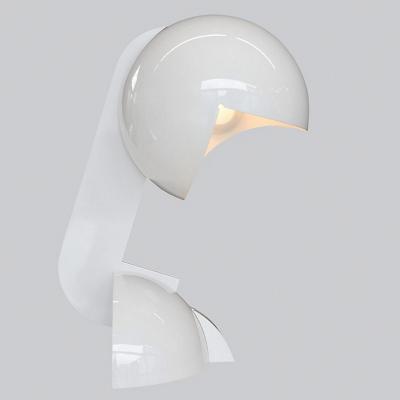
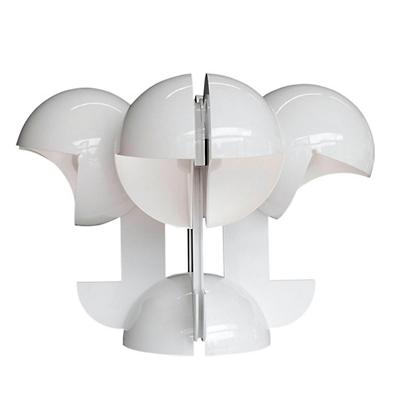
Alongside her architectural work, Aulenti created a wide range of influential furniture and lighting designs. She collaborated with many leading manufacturers of Italian design—including Artemide, Fontana Arte, Martinelli Luce, Stilnovo, and Kartell—bringing her sculptural sensibility to lighting and furnishings alike.
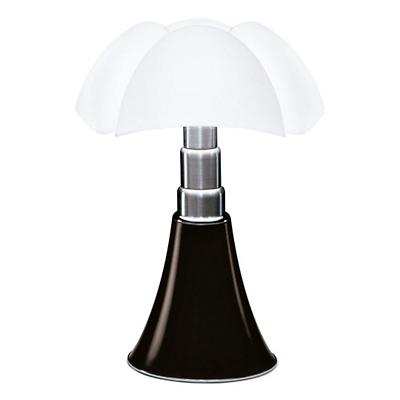
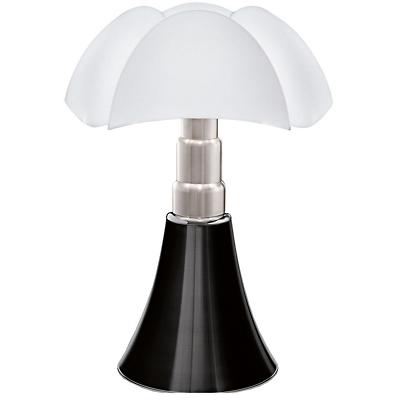
Among her most iconic designs is the Pipistrello lamp (1965) for Martinelli Luce, celebrated for its telescoping base and distinctive bat-wing diffuser. Another early lighting work, the Giova lamp for Fontana Arte (1964), combined multiple functions as a lamp, vase, and decorative object—demonstrating Aulenti’s ability to merge technical innovation with expressive form.
A Multidisciplinary Design Vision
Beyond lighting and furniture, Aulenti’s work included major architectural and cultural projects around the world. She is widely recognized for transforming the former Gare d’Orsay railway station in Paris into the Musée d’Orsay, one of the most celebrated museum conversions in modern architecture.
Her designs—whether interiors, objects, or large-scale architecture—shared a consistent goal: to create environments that integrate history, art, and human experience into cohesive living spaces.
Why We Celebrate Gae Aulenti
At Lumens, we recognize designers whose work transcends categories and generations. Gae Aulenti’s legacy lies in her ability to merge architecture, product design, and lighting into a unified vision—creating pieces that feel both intellectually rigorous and visually expressive.
Lighting designed by Gae Aulenti brings a sense of design history and sculptural elegance into modern interiors. Her pieces are both functional and iconic—objects that illuminate a space while serving as enduring symbols of Italian design innovation.











 Back To Top