Black Modern Bathroom Lighting & Vanity Lights












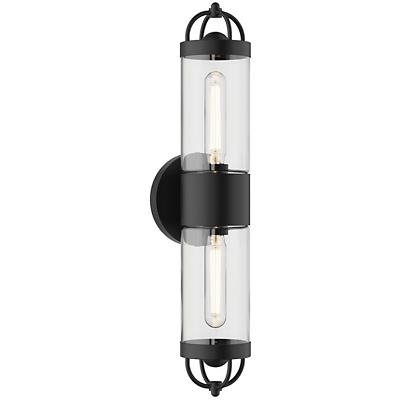


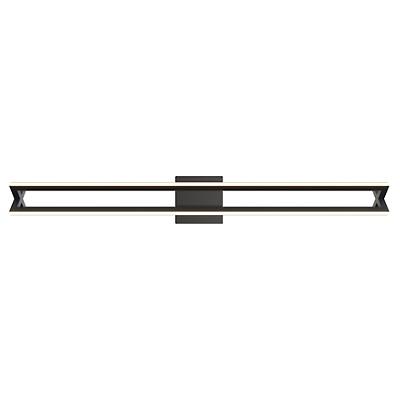

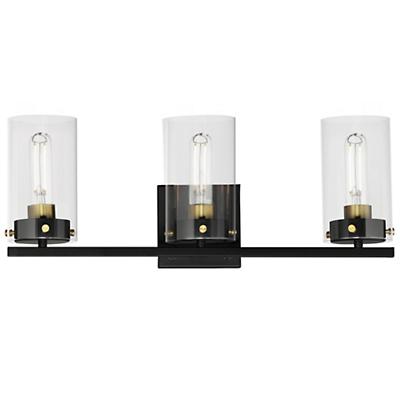
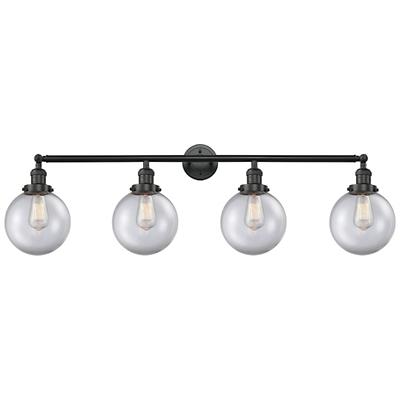
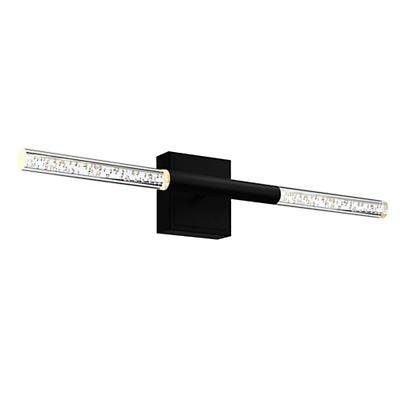
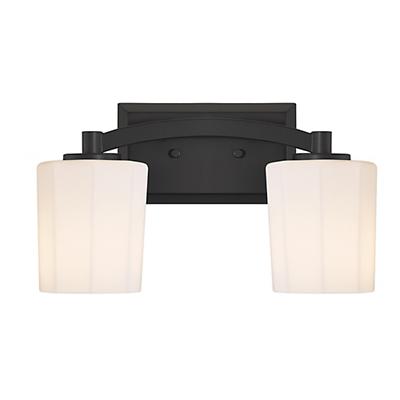
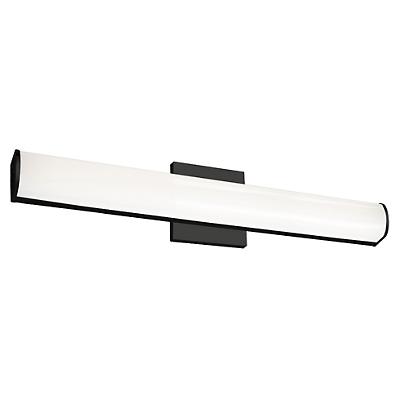

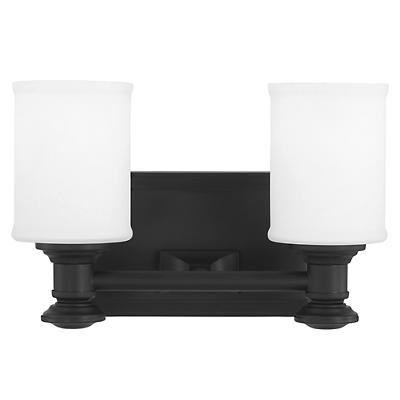
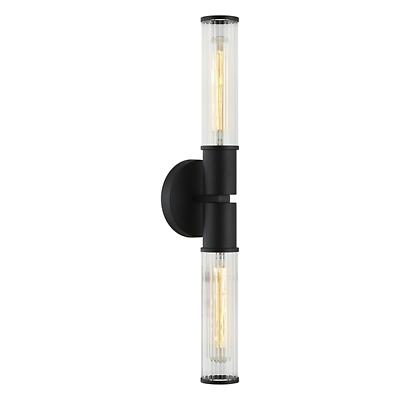
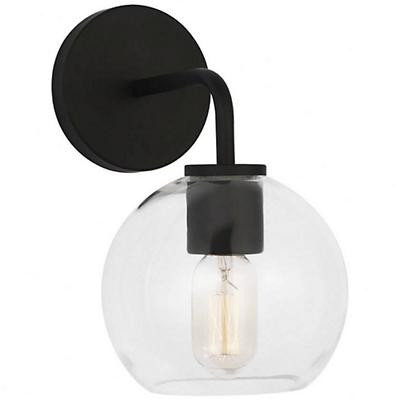


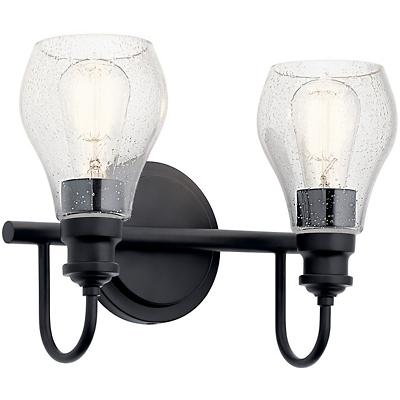
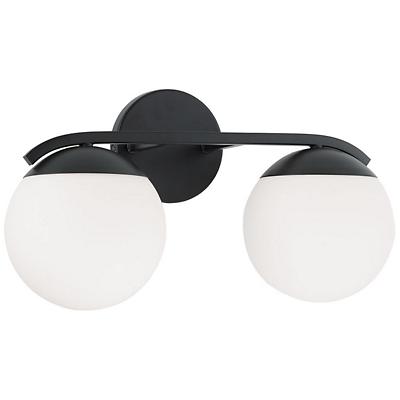
Bath & Vanity Lights Explore
Black Bath and Vanity Lights
When it comes to lighting a bathroom, a vanity light can be an effective option. Other popular options for lighting include wall sconces and pendants, but these types of fixtures often provide only accent lighting from a wall or downward lighting from the ceiling, which makes the layers of light in the space incomplete with dark patches remaining. A vanity light mounts to the wall above or alongside a mirror and can contain many light sources, creating a full layer of illumination throughout the room. The light sources can be traditional incandescent bulbs LEDs, small energy-efficient diodes that can hide within the fixture and allow for more creative design options due to their size. After factoring in the size of the fixture, the type of light source and the style of the fixture, what remains is an often overlooked aspect: the color of the piece. Ranging from neutral earth tones to bright and vibrant splashes, the color of the fixture can dictate the entire mood of the room, often more so than the brightness or warm coloring of the layers of light around it.
Other Considerations
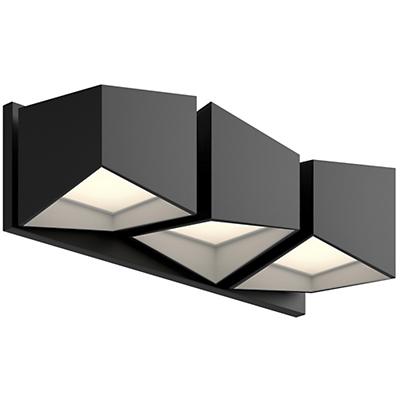
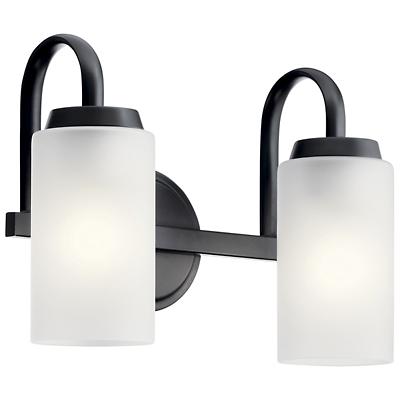
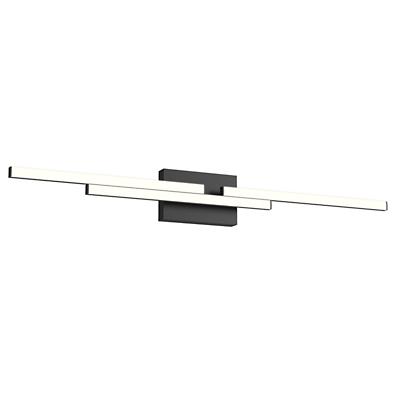
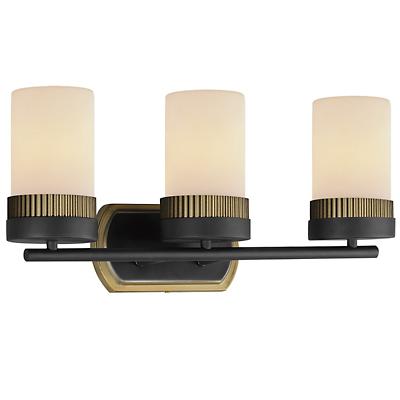
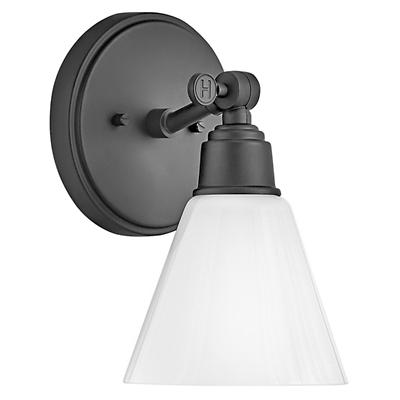
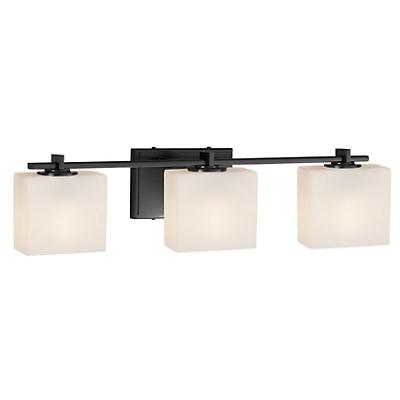
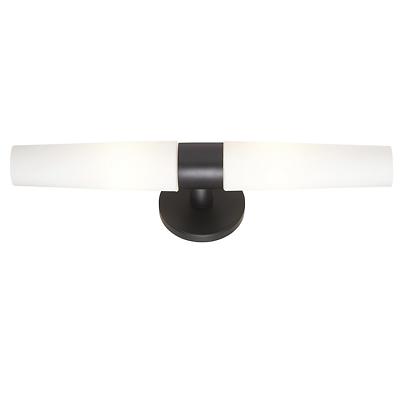
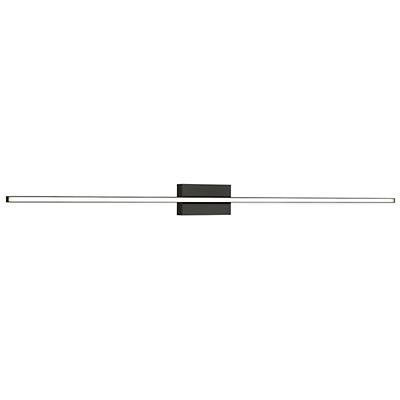
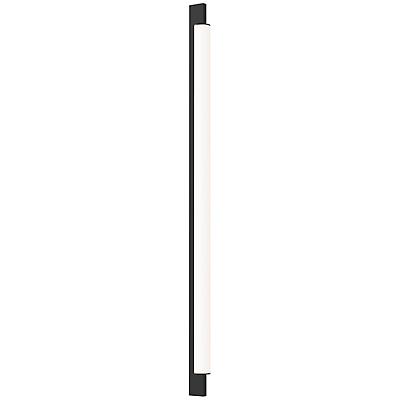
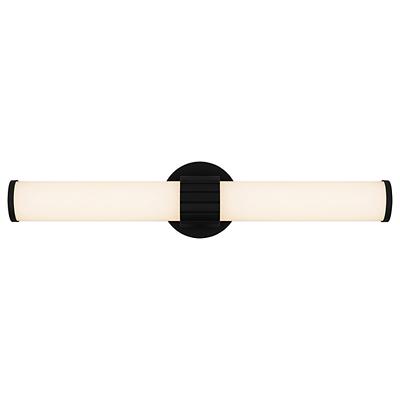
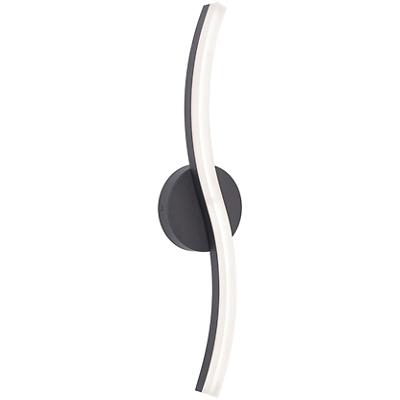
Black vanity lights in particular can create a bold look in the room. The black look will attract light toward it, making the room feel darker and moodier, which may be a plus depending on the user of the room or how the rest of the room is lit and arranged. Modern black bathroom lighting may make the space feel cozier or more intimate as well, allowing the light to remain nearby, being absorbed by the black coloring rather than reflecting off of and entering the rest of the room such as with white colored fixtures. Black bathroom lighting will still provide a reflection, however, unless a matte look is established. Matte bathroom lighting reinforces the solid, earthy look as the matte style doesn’t contain reflections, but rather only a solid color.
Black vanity lights still need to be sized for the space. Like any other fixture, if it is too big or too small, it doesn’t matter what color or how many lights it has as the piece won’t work in the space.
Bath & Vanity LightsFrequently Asked Questions
What is the best way to light a bathroom vanity?
Position two wall-mounted lights at eye level on either side of the mirror for even, shadow-free illumination. If only one fixture is possible, install it above the mirror, ensuring it covers the face evenly.
Expert Tip: For shadow-free lighting, combine side-mounted sconces with a linear fixture above the mirror. This layered approach ensures even illumination from multiple angles, perfect for detailed grooming tasks.
Is a vanity light a sconce?
Yes. A bathroom vanity light is often a type of sconce designed specifically for placement around mirrors or sink areas. It provides task lighting for personal grooming in a close-up setting.
Expert Tip: While vanity lights are often sconces, they can also include ceiling-mounted fixtures or backlit mirrors. Choose the style that best fits your space and lighting needs, ensuring it complements your bathroom’s overall design.
What lighting is best for bathrooms?
Aim for bulbs in the 2700K–3000K range to replicate natural daylight while maintaining a cozy feel. LEDs are favored for their energy efficiency, minimal heat output, and long lifespan.
Expert Tip: For a luxury touch, install smart bathroom lighting with adjustable color temperatures. This allows you to switch between warm light for relaxing baths and cool light for morning routines.
What are the lights on a vanity called?
They’re commonly referred to as vanity lights, but can also be described as wall-mounted sconces. These terms indicate a fixture specifically intended for close-up tasks in the bathroom.
Expert Tip: If you’re unsure about terminology, look for vanity light kits that include everything you need for installation, such as mounting hardware and bulbs. These kits simplify the process and ensure compatibility.
How big should your light fixture be over your vanity?
Generally, choose a fixture about 4 inches smaller than the total width of the vanity. This creates a balanced look and avoids having the fixture extend beyond the mirror or countertop edges.
Expert Tip: If your vanity is unusually wide or narrow, consider using multiple smaller fixtures instead of one large one. This allows for more flexibility in placement and ensures even light distribution.
What size bathroom vanity light should I get?
A common guideline is to choose a fixture that is slightly narrower than the width of your vanity—often about 4 inches less on each side. For instance, a 36-inch vanity might pair well with a 28-inch to 32-inch light, providing balanced illumination and a proportional look.
Expert Tip: If your vanity has a double sink, consider using two separate fixtures (one above each sink) instead of one long fixture. This ensures even lighting for both users and creates a more balanced, symmetrical look.
What is the best color for a bathroom vanity light?
Aim for warm white to neutral white (approximately 2700K–3000K), which offers flattering illumination for grooming tasks. This color temperature simulates natural sunlight while still feeling comfortable on the eyes.
Expert Tip: For a flattering glow, choose vanity lights with a high Color Rendering Index (CRI) of 90 or above. This ensures colors appear true to life, which is especially important for tasks like applying makeup or shaving.
How do you choose lighting for a bathroom vanity?
First, consider the size and placement of your mirror or mirrors. Ensure your fixtures provide even, shadow-free lighting by placing the fixture above or at either side of the mirror. Balance brightness and color temperature to meet your functional and aesthetic needs.
Expert Tip: If you’re using wall sconces on either side of the mirror, angle them slightly downward to minimize shadows on your face. For fixtures above the mirror, opt for linear LED bars with diffusers to distribute light evenly.
What are common bathroom vanity light styles?
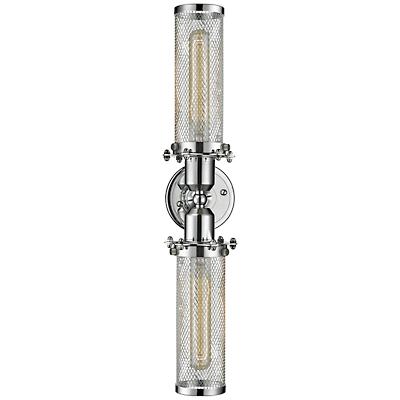
Traditional vanity bars, modern linear fixtures, and individual sconces are popular. Additionally, globe-style lights, industrial-inspired cage lights, and contemporary minimalistic designs often appear in today’s bathrooms.
Expert Tip: For a modern, spa-like feel, choose backlit mirrors or LED strip lighting integrated into the mirror frame. These options provide soft, even illumination and eliminate the need for traditional fixtures, saving space and creating a sleek look.
How much does a bathroom vanity light cost?
Prices vary based on brand, design complexity, and materials. Basic fixtures can start around $50, while upscale or designer models can range into the hundreds or even thousands of dollars.
Expert Tip: If you’re on a budget, look for LED vanity lights with built-in bulbs. While they may have a higher upfront cost, they save money in the long run due to their energy efficiency and long lifespan.
How many watts of light do I need for a bathroom vanity?
Generally, look for 60–80 watts of incandescent output per side of the mirror or the equivalent LED/CFL wattage. If you have multiple bulbs, spread out the wattage to ensure an even glow. Always check manufacturer recommendations for maximum bulb wattage.
Expert Tip: When using LED bulbs, remember that they consume far less wattage than incandescent bulbs while providing the same brightness. For example, a 10-watt LED can replace a 60-watt incandescent bulb.
How many lumens should a bathroom vanity have?
Between 1,600 and 2,400 lumens is a good starting range, depending on bathroom size and personal preference. More lumens produce brighter light, helpful for makeup application and shaving, while fewer lumens create a softer, more spa-like feel.
Expert Tip: For task lighting (e.g., makeup application or shaving), aim for 2,000–2,400 lumens. If you prefer a softer, more relaxing ambiance, use dimmable fixtures to adjust the brightness as needed.
What is the standard height of a bathroom vanity light?
Typically, mount the fixture around 75 to 80 inches from the floor. If you’re using sconces or lights on either side of a mirror, place them at eye level—around 60 to 65 inches from the floor—to reduce shadows.
Expert Tip: If your household includes people of varying heights, consider installing adjustable sconces or fixtures with swivel arms. This allows you to customize the height and angle of the light for each user.
