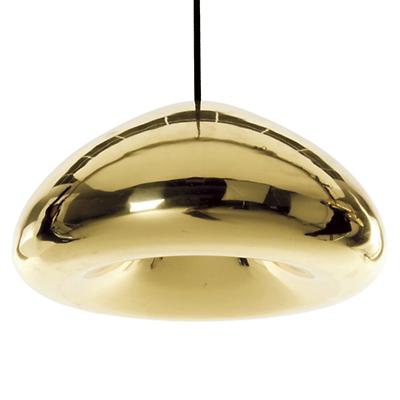
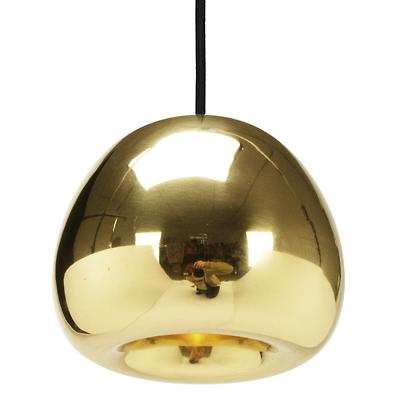
Then in 1994 his creation of the stackable plastic Jack set the stage for the experimental and exciting products to come. Today, Tom Dixon launches new collections annually in no fewer than 60 countries.
Why We Love Tom Dixon
In his effort to help revitalize British industry, Dixon has taken traditional industrial processes and transformed them into a means for incredible modern lighting, home accessories and furniture. Metal is hand-spun, beaten and polished. Like car headlights or glass insulators, glass is molded and pressed into sparkling shades. By opening up the previously unexplored decorative avenues possible with industrial technologies, Tom Dixon expresses an undeniable sense of independence and, yes, industriousness.
A Fun Fact About Tom Dixon
Tom Dixon was among the first designers to use the industrial process of vacuum metallization to create lighting. Primarily used in the manufacture of auto parts, insulation, food packaging and so forth, vacuum metallization involves vaporizing a thin layer of pure metal at a very high temperature and then sucking it onto a plastic surface by applying an electrical charge. And in which products does this process truly shine?
Noteworthy Lighting From Tom Dixon
Tom Dixon first perfected the use of vacuum metallization on two products: the space helmet-inspired Mirror Ball collection in 2003, and the warm Copper Shade collection in 2005. The rustic texture of hand-beaten Indian food storage vessels inspired the line of variably shaped Beat Lights, with shimmering golden interiors and white (2011) or black (2007) exteriors.