White Modern Sectional Sofas








Sectionals Explore
White Sectional Sofas
A white sectional sofa transforms any living space into a bright, sophisticated retreat. Whether you're furnishing a compact apartment or an expansive family room, white sectionals offer unmatched versatility—seamlessly adapting to minimalist, coastal, modern farmhouse, and contemporary aesthetics. Our curated collection features everything from cloud-like modular designs to sleek L-shaped configurations, with performance fabrics, washable slipcovers, and stain-resistant treatments that make white upholstery surprisingly practical for real life.
Understanding White Sectional Sofas: Design & Functionality
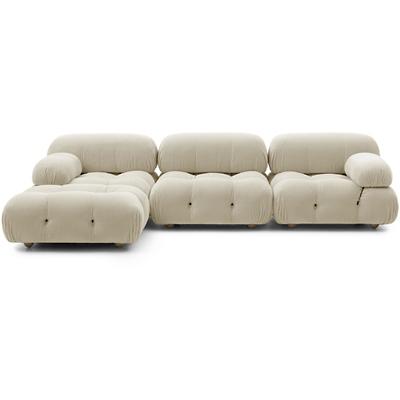
White sectionals anchor a room with clean, architectural presence while creating an airy, spacious feel. The Camaleonda Sectional Sofa by B&B Italia exemplifies iconic modular design with its Enia Ivory White fabric, offering reconfigurable seating that adapts as your needs evolve. For family-friendly spaces, the Bonnie and Clyde U-Shaped Sectional by Blu Dot in Vos Bone delivers deep, comfortable seating with durable performance upholstery.
Key benefits of white sectional sofas:
• Visually expands smaller rooms by reflecting natural light
• Provides neutral foundation for layering colors, textures, and patterns
• Available in true white, ivory, bone, and off-white tones to suit different aesthetics
• Seats more guests than traditional sofas while maximizing corner space
White Sectional Configurations: L-Shape, U-Shape & Modular Options
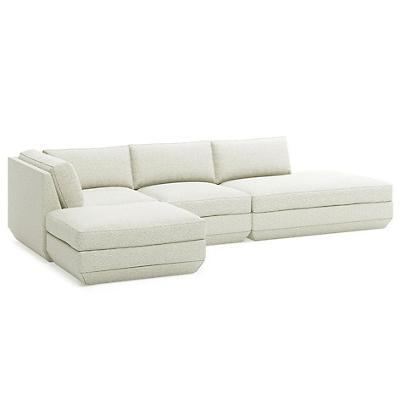
Choosing the right sectional layout depends on your room dimensions and how you use the space. L-shaped sectionals like the LRG Sectional Sofa by ARTLESS in Creme Linen Blend work beautifully in open-concept layouts, defining conversation zones without blocking sightlines. U-shaped configurations maximize seating capacity for large families or frequent entertainers, while modular sectionals offer ultimate flexibility—rearrange components to accommodate different gatherings or relocate pieces to other rooms.
Configuration considerations:
• L-shaped sectionals: Ideal for corners, typically seat 4-6 people comfortably
• U-shaped sectionals: Center-focused seating for 6-8+ guests, requires larger footprint
• Modular sectionals: Reconfigure as needed; perfect for evolving spaces or frequent movers
• Chaise orientation: Left-facing vs. right-facing placement depends on room entry points and traffic flow
The Albertine Modular Sectional by Huxe showcases how modular white sofas adapt to different layouts while maintaining cohesive design.
Performance Fabrics & Stain-Resistant Materials for White Sectionals
Modern white sectionals feature advanced fabrics engineered for durability and easy maintenance. Performance linens resist spills and stains while maintaining breathable comfort, making them ideal for households with children or pets. The Octavia Sectional Sofa by Classic Home in Ivory demonstrates how performance textiles deliver both elegance and practicality.
Fabric options for white sectionals:
• Performance linen: Natural aesthetic with enhanced stain resistance and cleanability
• Boucle upholstery: Textured, forgiving fabric that hides minor wear while adding visual interest
• Slipcover designs: Removable, machine-washable covers for ultimate maintenance ease
• Treated fabrics: Crypton, Sunbrella, or similar treatments repel liquids and resist fading
For outdoor or high-traffic areas, consider the Pixel Outdoor Sectional by Vondom in lacquered white, designed to withstand UV exposure and moisture while maintaining pristine appearance.
Sizing White Sectionals for Small Living Rooms & Apartments
Contrary to common concerns, white sectionals work exceptionally well in compact spaces—the light color prevents visual heaviness. Measure your room carefully, leaving 30-36 inches of walkway clearance around the sectional. For apartments, consider the Concord Sectional Sofa by Classic Home, which offers generous seating without overwhelming smaller footprints.
Small-space sectional strategies:
• Measure doorways, stairwells, and elevators before purchasing—modular designs navigate tight spaces more easily
• Choose armless or low-profile arms to maximize seating width without bulk
• Opt for raised legs to create visual lightness and facilitate cleaning underneath
• Consider apartment-scale sectionals (under 100 inches total length) for studios or one-bedroom layouts
The Brigitte Sectional by Jonathan Adler exemplifies compact luxury with tailored proportions perfect for urban living.
Styling White Sectional Sofas: Preventing Sterile Aesthetics
White sectionals provide the perfect canvas for layered, personalized styling. Prevent sterile or clinical appearances by incorporating varied textures, warm wood tones, and strategic pops of color. Layer throw pillows in different sizes, patterns, and materials—linen, velvet, bouclé—to add depth and visual interest. Drape a chunky knit or woven throw blanket over one arm for casual warmth.
Styling essentials for white sectionals:
• Mix pillow textures: combine smooth linen with nubby boucle and soft velvet
• Anchor with area rugs featuring warm neutrals or subtle patterns
• Balance brightness with natural wood coffee tables, side tables, or floor lamps
• Add greenery through potted plants or fresh florals for organic warmth
• Layer metallics—brass, bronze, or aged gold—through lighting and accessories
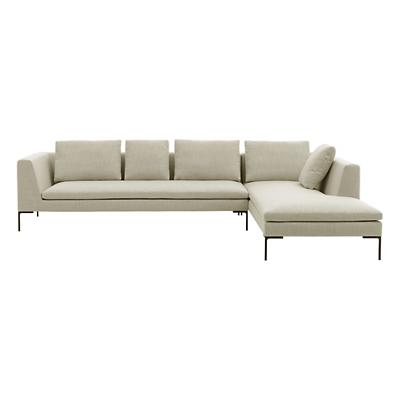
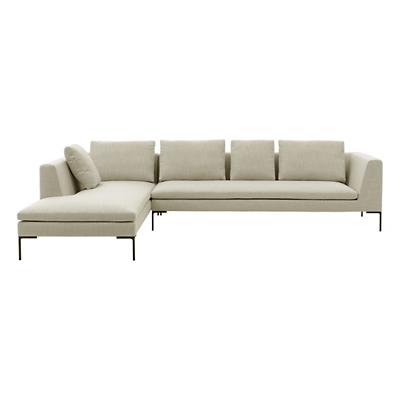
The Charles Sectional Sofa by B&B Italia in Esopo Ice demonstrates how subtle texture in white upholstery creates visual richness without additional color.
White vs. Off-White Sectionals: Choosing the Right Shade
Not all white sectionals are created equal—the undertones significantly impact overall aesthetic. True bright whites (cool-toned) create crisp, contemporary spaces but show wear more readily. Ivory, bone, and off-white tones (warm-toned) offer softer, more forgiving appearances that hide minor stains and aging better over time. The Liora 2-Piece Slipcover Sectional by Alder & Ore offers both Bone White and Chalk White options, illustrating these subtle but important distinctions.
Shade selection guide:
• Bright white: Modern, gallery-like spaces with predominantly cool color palettes
• Ivory/Cream: Traditional, transitional, or coastal interiors with warm wood tones
• Bone/Natural: Organic modern, Scandinavian, or minimalist aesthetics
• Off-white/Ecru: Forgiving middle ground that complements most design styles
Shopping for Quality White Sectionals: Investment Considerations
Quality sectional construction ensures longevity and continued comfort. Examine frame materials—hardwood frames outlast engineered wood or metal. High-density foam cushions (1.8+ density) maintain shape better than standard foam. Eight-way hand-tied springs provide superior support compared to sinuous springs, though they increase cost. The Matic Sectional Sofa by Knoll represents premium construction with refined details and lasting durability.
Quality indicators:
• Kiln-dried hardwood frames (maple, oak, or birch) for structural integrity
• Corner-blocked, glued, and screwed joints prevent loosening over time
• High-density foam cushions with down-blend toppers for cloud-like comfort
• Reinforced stress points at arms and seat junctions
• Detailed craftsmanship in seam work, button tufting, or channel quilting
Budget-conscious shoppers can find excellent value in collections like the Phillip 2-Piece Sectional Sofa by Four Hands, which balances quality construction with accessible pricing.
Maintaining White Sectional Sofas: Practical Care Tips
White sectionals require regular but simple maintenance to preserve their pristine appearance. Vacuum weekly using upholstery attachments to prevent dust accumulation. Treat spills immediately—blot (don't rub) with clean, damp cloth. Professional cleaning every 12-18 months refreshes fabric and removes embedded dirt. Many modern white sectionals feature removable, washable covers that simplify deep cleaning.
Maintenance best practices:
• Apply fabric protector spray (Scotchgard or similar) immediately after purchase
• Rotate cushions monthly to ensure even wear and sun exposure
• Keep sectionals away from direct sunlight to prevent yellowing or fading
• Use arm covers or decorative throws in high-contact areas
• Address stains promptly with manufacturer-recommended cleaning solutions
The Comfy White Linen Sectional by Meridian Furniture features textured linen that naturally camouflages minor wear while remaining elegant.
Conclusion: Find Your Perfect White Sectional
White sectional sofas offer timeless elegance, spatial versatility, and surprising practicality for modern living. From compact L-shaped designs to expansive U-shaped configurations, from performance fabrics to washable slipcovers, our collection addresses every lifestyle need without compromising style. Whether you gravitate toward minimalist Scandinavian aesthetics, coastal casual vibes, or contemporary sophistication, the right white sectional anchors your space with bright, welcoming presence.
Shop the latest trends and styles of sectionals and discover how the right piece transforms your living room into a refined sanctuary that adapts to your evolving design vision.
SectionalsFrequently Asked Questions
Are sectionals out of style?
Sectionals remain timeless and continue to be a popular choice due to their versatility, comfort, and adaptability to various interior designs. Their ability to offer ample seating makes them ideal for families or those who frequently entertain.
Expert Tip: Sectionals are evolving rather than disappearing. The most current designs feature modular components with reversible chaises and movable ottomans that transform from L-shape to U-shape configurations. Look for low-profile arms (under 25" tall) that maintain clean sightlines in open-concept spaces.
Are leather couches good for dogs?
Leather couches are often an excellent choice for pet owners. High-quality leather is durable, resistant to stains, and easy to clean, making it ideal for households with dogs. However, to maintain appearance, regular maintenance and choosing leather with a protective finish is recommended.
Expert Tip: Top-grain leather with an aniline finish actually improves with light scratching - the natural patina adds character. For heavy chewers, look for semi-aniline leathers with subtle protective coatings that resist punctures while maintaining breathability.
What sizes do sectionals come in?
Sectional sofas are available in various sizes, from compact designs suitable for smaller apartments to expansive configurations that comfortably seat large gatherings. Common sectional lengths range between 80 inches for small sofas up to over 160 inches for larger setups.
Expert Tip: The most versatile sectionals have 72"-84" main chaise sections with 30"-36" wide corner seats. This creates comfortable seating for 4-5 adults while allowing the pieces to be reconfigured as your space evolves.
What are the different types of sectional sofa?
Common sectional types include L-shaped, U-shaped, modular, chaise, and reclining sectionals. L-shaped sectionals fit neatly into corners, while U-shaped styles offer ample seating for larger spaces. Modular sectionals allow customization, chaise sectionals add comfort, and reclining sectionals enhance relaxation.
Expert Tip: Modular sectionals with uniform depth (typically 38"-40") throughout offer the most flexibility. Avoid "fixed arm" designs - instead choose models where every piece can serve as an armless or arm-ended component.
What is a good size sectional?
A good sectional size depends on room dimensions. Typically, smaller rooms accommodate sectionals around 80 to 100 inches long, while larger spaces benefit from sectionals 120 inches or longer. Ensure enough walking space—usually 18 to 24 inches—around the sofa.
Expert Tip: Allow at least 42" between your sectional and coffee table for comfortable legroom. In open floor plans, position the back of the sectional 36"-48" from walls or other furniture to create natural walkways.
What is the best color for a sectional sofa?
Neutral colors such as gray, beige, navy, or charcoal are considered best for sectional sofas due to their timeless appeal and versatility. These colors adapt easily to evolving interior design trends and can be accented with vibrant pillows or throws.
Expert Tip: Medium-value neutrals (think warm grays or taupe) hide everyday wear better than very light or dark hues. For longevity, choose a color that matches your home's trim work - this creates a cohesive backdrop for changing accent colors.
What is the best material for a sectional sofa?
High-quality leather, microfiber, performance fabrics, and linen-blends are among the best materials for sectional sofas. Leather is durable and luxurious; microfiber and performance fabrics resist stains and wear, making them suitable for families; and linen-blends offer casual elegance.
Expert Tip: Crypton and other performance fabrics now rival natural materials for luxury feel while offering superior stain resistance. Look for double-rubbed fabrics rated at 50,000+ Wyzenbeek tests for true durability.
Do I need a right or left facing sectional?
Choosing between right- or left-facing sectional depends on room layout and personal preference. Facing direction is determined by which side the chaise or extended section is positioned when facing the sofa from the front. Select the orientation that complements your space and traffic flow.
Expert Tip: Before choosing, tape out both configurations on your floor. The optimal orientation keeps the chaise extension perpendicular to natural room pathways, never blocking flow.
How do you store a sectional couch?
To store a sectional couch, first detach individual pieces. Protect each segment with furniture covers or blankets, and ideally store vertically to maximize space. Store cushions separately in a cool, dry area to prevent moisture buildup and damage.
Expert Tip: When storing, place moisture-absorbing silica packets between cushions and wrap frames in breathable cotton covers - plastic traps humidity that can damage both upholstery and wood.
What is the standard height of a sectional sofa?
The standard height of a sectional sofa ranges from 30 to 36 inches at the backrest. Seating heights are typically around 17 to 20 inches. Taller backs provide greater support, while lower profiles offer a modern aesthetic.
Expert Tip: The ideal seat height (18"-20") allows feet to rest flat on the floor with knees at 90 degrees. For taller individuals, look for models with adjustable feet that can raise the height up to 2".
Who makes the best quality sofas?
Top brands known for producing high-quality sofas include Gus Modern, Blu Dot, Herman Miller, American Leather, and Natuzzi. These manufacturers offer well-crafted sofas combining excellent construction, durable materials, and contemporary style.
Expert Tip: Beyond big names, look for manufacturers using traditional joinery like double-doweled corners and mortise-and-tenon frames - these techniques distribute weight evenly and prevent sagging.
What are the different types of couches?
Different couch types include sectionals, loveseats, chaise lounges, sleeper sofas, reclining sofas, and settees. Each style suits various space requirements, seating needs, and interior designs.
Expert Tip: Consider a "chair-and-a-half" (48"-54" wide) as a versatile middle ground between loveseats and sofas - perfect for curling up with a book while still accommodating occasional guests.
What are the best types of sofa?
The best sofa types for comfort, durability, and style include sectional sofas for ample seating, leather sofas for elegance and durability, sleeper sofas for multifunctional spaces, and performance-fabric sofas for busy households.
Expert Tip: For households with children, tight-back sofas with attached cushions eliminate gaps where crumbs accumulate, while still offering firm support for movie nights.
Should I get a sofa or loveseat?
Choosing between a sofa and loveseat depends on space and seating needs. Sofas typically seat three or more people, making them ideal for larger rooms and families. Loveseats seat two comfortably and are perfect for smaller spaces or as additional seating.
Expert Tip: In small spaces, a 72" apartment-size sofa often provides more flexible seating than a loveseat, especially when paired with an accent chair that can be moved as needed.
How many people can sit on a couch vs a sofa?
Typically, sofas comfortably seat three to four adults, while couches or loveseats usually accommodate two. Larger sectionals can seat five or more, depending on their configuration and length.
Expert Tip: Allow 24" of width per person for comfortable seating, 18" for occasional use. A standard 84" sofa thus seats 3-4 adults comfortably, not the 4-5 often claimed.
What is a small sofa called?
A small sofa is commonly referred to as a loveseat or settee. These compact seating solutions comfortably fit two people and are perfect for smaller spaces or as complementary seating in larger rooms.
Expert Tip: The term "settee" originally referred to long benches with arms and backs - today's versions often feature elegant carved details that elevate small spaces with traditional charm.

 Back To Top