Foscarini

The Foscarini Story
Founded on the Murano island in Venice, Italy in 1981, Foscarini started out creating blown glass-based lighting. They eventually expanded into other materials (the first being the Havana in 1993), and moved in 1994 to the Marcon area of Venice, into a building that reflected the modern aesthetic of their contemporary lighting. Success led to brand stability and swiftly growing name recognition.
Read moreRead less
Why We Love Foscarini Lighting
Foscarini stands out as one of the most independent, innovative, and spirited lighting designers in Europe. The brand's foundation in Murano, without a furnace of its own, necessitated a selective approach to collaboration, laying the groundwork for its independent and versatile design ethos. Foscarini’s commitment to diversity and creativity is evident in its partnerships with a wide array of designers, ranging from emerging talents to established creatives. This mix has resulted in lighting fixtures that are not just functional but are also characterized by strong personalities, often with a touch of irony, and always expressing new, inventive ideas. Foscarini's lights are more than mere illuminators; they are bold statements of art and design.
A Fun Fact About Foscarini
Foscarini is also active in the publishing industry. From 2002 to 2008, they published "Lux Magazine," highlighting their products, designers and design and lighting theory in general. Starting in 2010, Foscarini started publishing "Inventario," a "bookzine" focusing on design, research and innovation in all creative disciplines.
Noteworthy Lighting from Foscarini
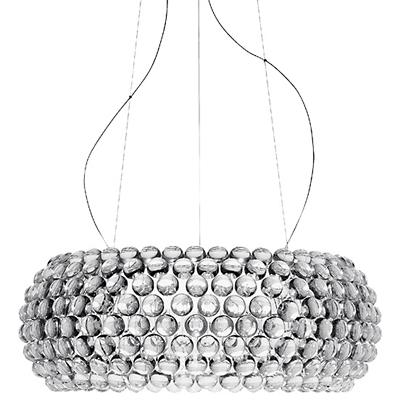
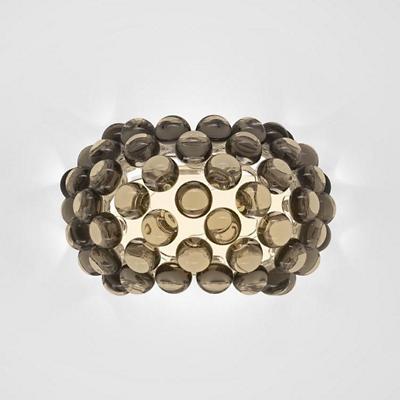
The Caboche collection, highlighted by the Caboche Flushmount, was designed by Patricia Urquiola and Eliana Gerotto, and has a stunning jewel-like presence courtesy of its many individual transparent PMMA spheres. The Lumiere was designed in 1990 by Rodolfo Dordoni, and was Foscarini's first breakout success in decorative lighting.







Showing 30 of 160

 Back To Top